




BS4504 PN16 Steel Plate Flange
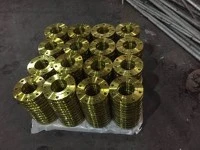
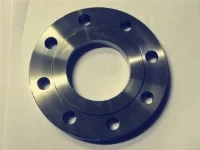
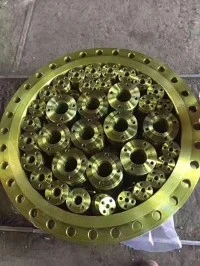
Think of a steel plate flange as the "connector" that ties your pipes and equipment together. The BS4504 PN16 Steel Plate Flange is essentially a flat, circular steel disc with bolt holes around its perimeter, designed under the British Standard BS4504 with a pressure rating of PN16. At its core, it's a straightforward but vital component: you weld or screw it onto the end of a pipe, then bolt it to another flange to create a secure, leak-proof joint. That simple bolt-on design means you can hook up valves, pumps, or any other equipment without breaking out the welder every time—and when something needs replacing, you just unbolt and swap. No cutting, no re-welding, no downtime drag.
What Is This Flange?
Think of a steel plate flange as the "connector" that ties your pipes and equipment together. The BS4504 PN16 Steel Plate Flange is essentially a flat, circular steel disc with bolt holes around its perimeter, designed under the British Standard BS4504 with a pressure rating of PN16. At its core, it's a straightforward but vital component: you weld or screw it onto the end of a pipe, then bolt it to another flange to create a secure, leak-proof joint.
But its job goes beyond just connecting things. This little piece of steel is what makes a piping system workable. It allows you to easily attach valves, pumps, or other equipment to your pipeline. Need to do maintenance? Just unbolt the joint, swap out a component, and bolt it back together-no cutting and re-welding pipes required.

In the demanding world of building pipeline hardware and building materials, this simplicity translates to huge time and cost savings on any project.
Technical Specifications: The Numbers You Need
When you're specifying components for a project, the details are everything. Below is a comprehensive breakdown of the BS4504 PN16 Steel Plate Flange's specifications. This data is based on standard dimensions, ensuring compatibility with other BS4504 PN16 components.
|
Parameter |
Explanation |
Dimension (mm) |
|
Standard |
The design and manufacturing code it follows. |
BS4504 (Equivalent to EN 1092-1) |
|
Pressure Rating |
The maximum pressure the flange can handle at ambient temperature. |
PN16 (approx. 16 bar / 232 psi) |
|
Size Range |
The nominal pipe size (DN) the flange is designed for. |
DN10 to DN600 (and larger upon request) |
|
Flange Face Type |
The sealing surface style. The most common is a Raised Face (RF). |
RF (with other types like FF available) |
|
Outer Diameter |
The total width of the flange. |
Varies by size (e.g., DN100 is 220mm) |
|
Bolt Circle Diameter |
The diameter of the circle passing through the center of the bolt holes. |
Varies by size (e.g., DN100 is 180mm) |
|
Bolt Hole Diameter & Qty |
The size and number of bolt holes. |
Varies (e.g., DN100 has 8 x 18mm holes) |
|
Flange Thickness |
The overall thickness of the flange ring. |
Varies by size (e.g., DN100 is 22mm) |
|
Material Grades |
The specific steel used for manufacturing. |
Carbon Steel: ASTM A105, S235JR. Stainless Steel: ASTM A182 F304, F316L |
Material Matters: A Deep Dive into Quality
Let me be straight with you: the real difference between a flange that lasts and one that fails comes down to the steel. I've seen too many projects go sideways because someone tried to save a few bucks on material. That's why we're picky about our suppliers and test every batch that comes in.
Carbon Steel (e.g., ASTM A105)
For most building jobs-water lines, gas pipes, standard oil applications-this is the workhorse you want. It's strong, welds nicely, and won't break the bank. We run a tight ship on the machining so the face is smooth and the bolt holes line up perfectly the first time.
Stainless Steel (e.g., ASTM A182 F304/316L)
Now, if you're dealing with anything corrosive-seawater, chemicals, that kind of stuff-you'd be crazy not to go with stainless. Grade 304 handles most everyday corrosion just fine. But 316L? That's what we'd recommend for demanding environments. The molybdenum in it gives you extra protection against pitting and crevice corrosion. For coastal installations or chemical plants, this is our go-to recommendation every time.
We don't cut corners on material. It's not worth the headache down the road, and our reputation is built on delivering PN16 raised face flanges that you can install and forget about.
Our Capabilities: From Raw Steel to Finished Product

I'll give you a bit of our backstory, because I think it matters. We started this business back in 1993, right here in Mengcun County-the heart of China's pipe fitting industry. Being based here isn't just about history; it's about logistics. We're only 120 klicks from Xingang Port, which means when your order is ready, it gets on a ship fast and cost-effectively.
We've grown methodically, not recklessly. Our factory sits on over 18,000 square meters, and we've invested about 50 million RMB into fixed assets. What does that mean for you? It means we own our equipment-3500T hydraulic presses, 2500D CNC ring rolling machines, 7 forging hammers, precision lathes, and drillers.
This setup lets us crank out flanges up to 2800MM in diameter, and we push about 13,000 tons of flanges and fittings out the door every year.
Our Production Process & Quality Control in Action
Here's how we actually work, step by step. It's not magic; it's just discipline.
Incoming Material Check
Every steel billet is verified against its mill certificate. No surprises.
01
Forging & Shaping
We heat and forge the blanks using our presses or ring rollers. This isn't just about brute force-temperature and timing are carefully logged.
02
Controlled Cooling
Sounds boring, but it's critical to prevent stress fractures.
03
CNC Machining
This is where precision happens. We bore the inner hole, machine the raised face, and drill the bolt circle. Tolerances are checked, not assumed.
04
Dimensional & Pressure Testing
We randomly pull pieces from every batch to verify dimensions and pressure rating. If it doesn't meet PN16 specs, it doesn't leave the shop.
05
We recently handled a rush order for a desalination client in Spain. They needed custom-sized plate flanges in 316L, with a tight deadline. We sat down, adjusted our schedule, and delivered two weeks early. That client has been ordering from us ever since. That's the kind of relationship we're building-not just filling orders, but solving problems.
Real-World Applications: Where You'll Find This Flange
You'll see our plate flanges holding things together in all sorts of places. Commercial construction? HVAC, fire protection, water supply-they're in there. They pair up perfectly with our full range of pipe fittings and elbows to make complete, dependable systems. For general hardware, they're the unsung heroes in structural supports and pipe hangers. And in heavy industry-chemical plants, refineries, power generation-the reliability of these steel plate flanges is absolutely critical, and we treat it that way.
We've shipped to clients from Russia to South Korea, from France to Dubai, and all across Southeast Asia, Spain, Israel, Thailand, and South America. That reach isn't accidental; it's the result of consistent quality and doing what we say we'll do.
Your Partner for Success: More Than Just a Supplier
Look, I know you've got options. There are plenty of people selling flanges. So why us? Because we treat this as a partnership, not a transaction.
Here's our commitment, plain and simple:
Quality That's Actually Checked: Premium materials, in-process inspections, and full traceability.
Fair Pricing: We manufacture direct, so there's no middleman markup. Just a fair price for a solid product.
Deliveries We Plan For: We're meticulous about scheduling. If we say it'll ship on Tuesday, it ships on Tuesday.
Experience That Counts: Thirty-plus years in this business means we've probably seen your problem before and know how to solve it.
Product Specifications Sheet
Here's a comprehensive technical overview to assist your selection process. Please note: All dimensions are nominal and provided for reference. For specific engineering requirements, please contact us.
BS 4504 PN16 Steel Plate Flange Dimensions
|
DN |
Flange Outer Diameter (D) |
Bolt Circle (K) |
Bolt Hole Diameter |
No. of Bolts |
Flange Thickness (C) |
Approx. Weight (kg) |
|
DN10 |
90 |
60 |
14 |
4 |
14 |
0.56 |
|
DN15 |
95 |
65 |
14 |
4 |
14 |
0.64 |
|
DN20 |
105 |
75 |
14 |
4 |
16 |
0.93 |
|
DN25 |
115 |
85 |
14 |
4 |
16 |
1.13 |
|
DN32 |
140 |
100 |
18 |
4 |
16 |
1.66 |
|
DN40 |
150 |
110 |
18 |
4 |
18 |
2.11 |
|
DN50 |
165 |
125 |
18 |
4 |
18 |
2.59 |
|
DN65 |
185 |
145 |
18 |
4 |
20 |
3.73 |
|
DN80 |
200 |
160 |
18 |
8 |
20 |
4.28 |
|
DN100 |
220 |
180 |
18 |
8 |
22 |
5.83 |
|
DN125 |
250 |
210 |
18 |
8 |
22 |
7.68 |
|
DN150 |
285 |
240 |
22 |
8 |
24 |
10.85 |
|
DN200 |
340 |
295 |
22 |
12 |
26 |
16.91 |
|
DN250 |
405 |
355 |
26 |
12 |
28 |
25.95 |
|
DN300 |
460 |
410 |
26 |
12 |
30 |
36.17 |
|
DN350 |
520 |
470 |
26 |
16 |
32 |
49.58 |
|
DN400 |
580 |
525 |
30 |
16 |
36 |
69.50 |
Frequently Asked Questions (FAQ)
Q: 1. What exactly does "BS4504 PN16" mean on a steel plate flange?
A: It's a complete set of specifications. "BS4504" refers to the British Standard that dictates its design, dimensions, and tolerances. "PN16" is its pressure rating (Nominal Pressure), which indicates it's designed for a maximum working pressure of 16 bar at ambient temperatures. It's your shorthand for knowing the flange will fit and perform correctly in a PN16 system.
Q: 2. How does a slip-on flange differ from a weld neck flange?
A: They are two different ways to attach a flange. A "slip-on" flange has a slightly larger bore, so the pipe slides inside it before being welded both inside and out. It's easier to align and quicker to install. A "weld neck" flange has a long, tapered neck that is butt-welded to the pipe, making it stronger and more suitable for high-pressure and high-temperature applications.
Q: 3. Can a BS4504 PN16 flange be bolted to a PN10 flange?
A: While the bolt holes might align, we strongly advise against it. The thickness and other critical dimensions can differ. You risk creating a leak path or compromising the joint's integrity. Always match the pressure ratings and standards (PN16 to PN16) for a safe and reliable connection.
Q: 4. What is the difference between a "Raised Face" (RF) and a "Flat Face" (FF) flange?
A: The "face" is the sealing surface. A Raised Face (RF) has a small, machined ring (the "raised face") that protrudes slightly, which concentrates the gasket pressure for a better seal. A Flat Face (FF) is completely flat across the entire face and is typically used with flat gaskets on cast iron equipment or for lower-pressure applications.
Q: 5. Does Hangxin provide material test certificates for your flanges?
A: Absolutely. We take quality seriously. We can provide a full range of documentation, including Mill Test Certificates (MTC) that verify the chemical and physical properties of the material, as well as a 3.1B Material Certificate, in compliance with EN 10204, to provide full traceability for your project.
When you choose the BS4504 PN16 Steel Plate Flange from us, you're not just buying a component-you're tapping into three decades of focused, reliable manufacturing. We keep things simple: quality materials, precise machining, and honest communication. Give us a call or drop an email. Let's talk about your project and see how we can help you get it done right.
Contact Us:
Contact Person: Sandy Zhang
Tel: +86-317-5298874
Whatsapp: 008615127785550
Wechat: 0086 15127785550
Email: sandy@yongxingflange.com

Add: DingZhuangZi Industrial Zone, Mengcun County, Cangzhou City, Hebei Province, China
Hot Tags: bs4504 pn16 steel plate flange, China bs4504 pn16 steel plate flange manufacturers, suppliers, factory, steel flange rohs certification, steel flange mss certification, steel flange fatigue testing, steel flange aga certification, building steel flange, steel flange cga certification


Send Inquiry
