



Blind Pipe Flanges
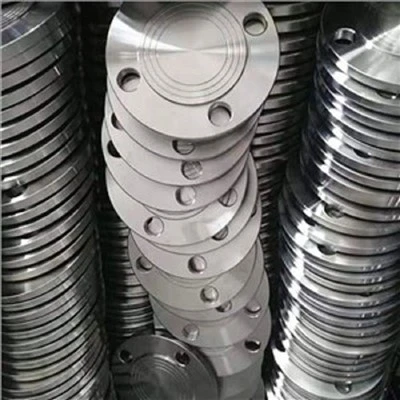
Blind pipe flanges without a center bore (hole or opening) and are available in both raised face (rf) and flat face (ff) styles. While most flange types create a connection point that allows the flow of liquid, gas, or air, blind flanges are used to seal the end of a piping system and prevent flow. Blind flanges may be used when testing pipe pressure, to create an access point in a piping system, to temporarily seal a piping system while modifying or repairing the line, or to create a long-term seal to terminate a piping system.a blind flange is bolted, rather than welded in place. This allows easier access as needed for pipe system upkeep, inspection, or to allow for future expansion. Pairing with a gasket creates a tight seal: The gasket fills the space between the flange faces, which prevents liquid or gas leaks.
Our Factory
Located in Mengcun county knows as hometown of elbows and pipe fittings in China, it enjoys convenient transportation with only 120 kilometers to Xingang Port on the north and 260 kilometers to Beijing Capital International Airport on the northwest. The company covers an area of more than18,000 square meters and has about 50,000,000 yuan in fixed assets.We specialize in forged flanges and butt welded pipe fittings. Our main products are welding neck flange, slip on flange, blind flange, plate flange, socket welding flange, lap joint flange, elbow of short and long radius in 45/90/180 degrees, equal and reducing tee, concentric and eccentric reducer and cap. These products are made according to international standards as ANSI(ASME), DIN, JIS, BS, GOST, EN1092, AWWA, SABS. We can also make non-standard, special-designed items according to customers requirements. The materials we supply are carbon steel, stainless steel of different grades.
Why Choose Us
Production Equipment
Our company equips hydraulic press machine of 3500T,CNC ring rolling machine of 2500D,7 forging hammers, 7 large bandsaw,lathes and drillers for the making of forged flanges at maximum diameter of 2800MM.
Quality Control
These products are manufactured in accordance with international standards such as ANSI (ASME), DIN, JIS, BS, GOST, EN1092, AWWA, SABS, etc.
Our Certificate
ISO9001 3A CE.
Our Service
Fine quality, competitive price, timely delivery, good reputation and years of experience in this field have well established us as reliable suppler to customers all over the world.
Related Product

Product Name: Astm A105 Flange lily@yongxingflange.com yanglily1126@gmail.com CANGZHOU HANGXIN FLANGE CO.,LIMITED is a A105 carbon steel flange manufacturer,we supply the best price exporter of ASTM A105 flanges,we are carbon steel A105N flat flanges and ASTM A105 carbon steel EN 1092-1 Flange Trader in China.
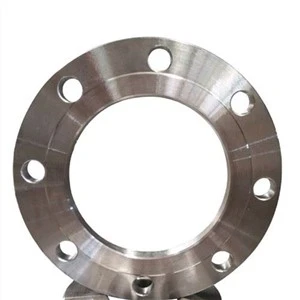
Sale BS4504 PN 10 Steel Flange
Product Name: Factory Sale BS4504 PN 10 Steel Flange lily@yongxingflange.com yanglily1126@gmail.com CANGZHOU HANGXIN FLANGE CO.,LIMITED is the world's largest supplier of steel flanges and the company's largest export base.
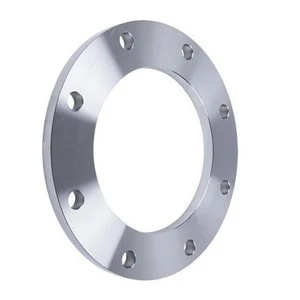
Product Name: BS4504 carbon steel Flanges in China Manufacturing BS4504 carbon steel Flanges in China, We holds a wide range of carbon steel Plate Flange in all Thickness, stock for immediate despatch throughout China.
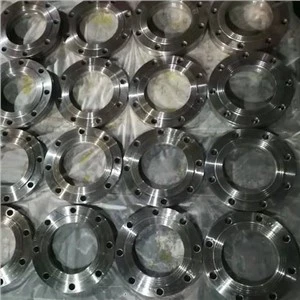
Product Name: Carbon Steeel BS4504 Flange In China lily@yongxingflange.com yanglily1126@gmail.com Applications: it remains in use for the dimensions of light duty, economy carbon steel flanges in applications Water, shipbuilding, petrochemical, gas, electricity, valves, general pipeline connection projects, etc.
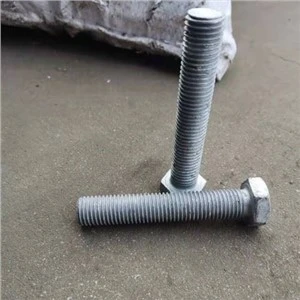
Product Name: Carbon Steeel Flange In China Applications: Water, shipbuilding, petrochemical, gas, electricity, valves, general pipeline connection projects, etc.
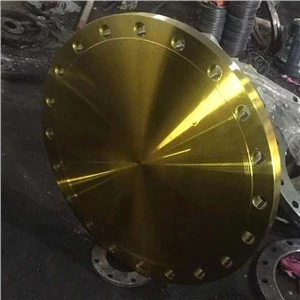
CANGZHOU HANGXING FLANGE CO.,LIMITED ,we produce steel flange and fittings.ANSI ,GOST,DIN,JIS ,BS and other standards as customer requirement. Email:sandy@yongxingflange.com Whatsapp/Wechat:0086 15127785550
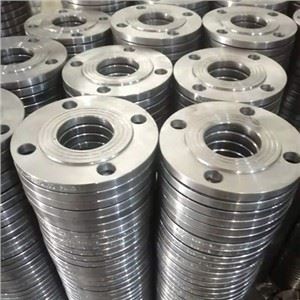
Product Name: Carbon Steel Flange In Chinalily@yongxingflange.com yanglily1126@gmail.com A flange is a forged or cast steel ring, it designed to connect the mechanical part of a pipeline or any other equipment.
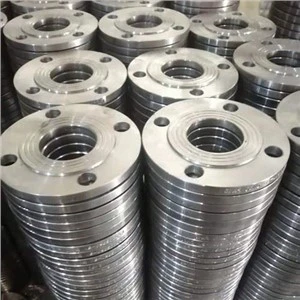
Product Name: Factory Sale Steel Flange In China CANGZHOU HANGXIN FLANGE CO.,LIMITED, Supplier, and Exporters of Carbon Steel Flanges in China. Our qualitative range of Carbon Steel Flanges is exclusively designed for several piping applications of various industries.
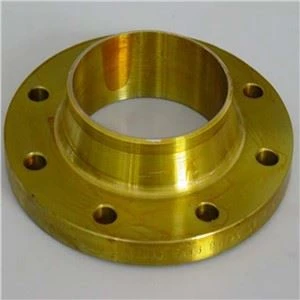
DIN PN16 steel Flange designs: Weld neck flange (WN flange), slip-on flange(SO flange), lap joint flange(LJ flange), socket weld flange(SW flange), threaded flange(TH flange), blind flange(BL flange).
What is Blind Pipe Flanges
Blind pipe flanges without a center bore (hole or opening) and are available in both raised face (rf) and flat face (ff) styles. While most flange types create a connection point that allows the flow of liquid, gas, or air, blind flanges are used to seal the end of a piping system and prevent flow. Blind flanges may be used when testing pipe pressure, to create an access point in a piping system, to temporarily seal a piping system while modifying or repairing the line, or to create a long-term seal to terminate a piping system.a blind flange is bolted, rather than welded in place. This allows easier access as needed for pipe system upkeep, inspection, or to allow for future expansion. Pairing with a gasket creates a tight seal: The gasket fills the space between the flange faces, which prevents liquid or gas leaks.
Benefits of Blind Pipe Flanges
Complete sealing and containment
One of the key benefits of a blind flange is its ability to completely seal off sections of a piping system. This is critical in industries like chemical processing, oil and gas, and water treatment. In the mentioned industries, containment is essential to prevent leaks and ensure safety.
Pressure resistance
Blind flanges can withstand high pressure. Their solid construction means they can endure the stresses found in high-pressure pipelines. Thus, blind flanges are ideal for applications that require robust, secure termination points.
Inspection and maintenance
One of the main reasons what is a blind flange used is the ease of access. Unlike permanent sealing methods, a blind flange allows for easy removal. This feature enables quick access to piping systems for inspection, cleaning, or maintenance.
Cost-effective solution
Blind flanges are also cost-effective. This advantage is particularly true where future modifications are likely. Instead of cutting and welding pipes whenever changes are needed, blind flanges can be removed. This quality allows quick and easy system adjustments.
Types of Blind Pipe Flanges
Raised Face Blind Flanges
Raised face blind flanges feature a raised ring around the face of the flange, creating a seal when mated with a similarly raised face flange. This design is suitable for high-pressure applications due to its increased sealing surface area.
Ring Joint Blind Flanges
Ring joint blind flanges utilize a metal ring gasket to seal the connection. This type of flange is particularly effective in high-pressure and high-temperature applications, as the ring gasket can withstand extreme conditions.
Flat Face Blind Flanges
Flat face blind flanges have a flat face without any raised areas. This design is less common than raised face or ring joint flanges due to its lower sealability. However, flat face flanges are still suitable for low-pressure applications.
Weld Neck Blind Flanges
Weld neck blind flanges are attached to the pipe by a circular weld around the neck of the flange. This design provides excellent strength and is suitable for high-pressure and high-temperature applications.
Close Nipple Blind Flanges
Close nipple blind flanges are similar to weld neck flanges, but they have a shorter neck. This design is typically used in tight spaces where a full-length neck would interfere with other components.
Application of Blind Pipe Flanges
Blind pipe flanges are commonly used in the oil and gas industries, where high pressure and heavy pipeline transport is involved. The flanges are installed in pipes to ensure it remains secure and does not leak. They also ensure the pipeline is easy to connect and disconnect whenever necessary maintenance work or repairs are needed.
In the marine industry, blind pipe flanges connect pipes in vessels and offshore platforms. The offshore environment can be challenging due to the harsh weather conditions, making it essential to use materials that can withstand the hostile environment. Flanges used in the marine industry tend to be corrosion-resistant and highly durable.
Industries that produce chemical products require high-quality materials, such as blind pipe flanges, to handle the manufacturing processes securely. Blind pipe flanges are used in plants that manufacture fertilizers, pesticides, and other chemicals that require high pressure and high-temperature pipelines to ensure the safety of the manufacturing plants.
Blind pipe flanges also have a place in the power generation industry, where they are commonly used in power plants. Gas and water lines are fitted with blind pipe flanges to help secure the pipelines going to and from the power plant. Using blind pipe flanges ensures that the pipelines are secure and prevents any leakage of gas, water, or steam.
The agricultural industry is another field in which blind pipe flanges transport fertilizers, pesticides, and water for irrigation. The flanges connect hoses or pipes that transport water or liquid fertilizers in the field. The use of blind pipe flanges helps to ensure that the pipes are secured and no liquid is lost during transportation.
How to Choose Blind Pipe Flanges


Pipeline Size and Type
Matching the size of the flange to that of the pipeline ensures a secure and leak-proof seal. Any size disparity can lead to leaks, requiring costly repairs and causing downtime.The pipeline type is also an essential consideration as it influences the selection of the flange material. For example, pipes carrying hazardous fluids require flanges made from specific materials to withstand harsh conditions. The pipeline type can also influence the design and shape of the blind flange. Pipes and valves transferring fluids under high pressure require thicker flanges.
Flange Material
The material used in making a flange is crucial because it determines the component's strength, durability, and resistance to corrosion and temperature changes. Flanges can be made from various materials, such as steel, stainless steel, and cast iron.Steel flanges are widely used in industrial applications because they possess high strength and durability. Similarly, stainless steel flanges are popular due to their corrosion resistance, making them suitable for pipelines carrying corrosive fluids. Meanwhile, cast iron flanges are less expensive than steel and stainless steel and are ideal for pipelines carrying non-corrosive fluids.
Flange Dimensions
The dimensions include the flange diameter, bolt circle diameter, number of bolt holes, bolt size, and thickness. The flange diameter is the outer diameter of the flange, which should match the diameter of the pipe it connects. Meanwhile, the bolt circle diameter is drawn through the center of the bolt holes, and it should match the pipeline's diameter.
Pressure Rating
A flange's pressure rating indicates its capacity to resist pressure without experiencing leakage or failure. The pressure rating is also linked to the maximum allowable working pressure (MAWP) and temperature rating, which differ depending on the rating. Therefore, selecting a flange with a pressure rating more elevated than the pipeline's operating pressure is crucial to ensure efficient operation.
How to Install a Blind Pipe Flanges
Prepare the pipe
Make sure the pipe end is clean and free of imperfections. Inspect the surface to ensure there are no burrs, dents, or irregularities. These could interfere with the seal of the blind flange.
Assemble the Outer Sleeves and Inner Ring Spacers
Begin by placing the outer sleeves and inner ring spacers onto the pipe. The outer sleeve goes on first, followed by the inner ring spacer.
Lay Out the Blind Pipe Flanges
With the sleeves and spacers in place, lay both parts of the blind flange on a flat surface. You should ensure that they are positioned correctly. The bolt holes on both parts of the blind flange should face upward and be perfectly aligned.
Insert and Tighten Bolts
Place the blind flange over the pipe end and align it with the bolt holes. Begin by placing the lower locking nut into its respective bolt hole first, followed by the upper bolt.
Join the Blind Flange Components
Once all spacer rings are inside the flanges, slide both parts of the blind flange together carefully. Make sure everything remains aligned as you begin tightening the bolts.
Conduct Final Checking
After tightening all the bolts and nuts, conduct a final inspection to ensure that all components are securely in place.
Regular Inspections
Over time, carbon steel blind flanges may experience wear and tear. Regular inspections can help identify any potential issues before they escalate into major problems.
Cleaning and Lubrication
Keep the flanges clean and free of debris to prevent corrosion and damage. Apply lubrication to the bolts to prevent rust and ensure smooth operation.
Corrosion Protection
Carbon steel is susceptible to corrosion, especially in harsh environments. Implement corrosion protection measures such as coatings or cathodic protection to extend the lifespan of the flanges.
Temperature Monitoring
Monitor the temperature of the system to prevent overheating or thermal expansion that can affect the performance of the flanges. Implement thermal insulation if necessary.
Emergency Preparedness
Have a contingency plan in place for emergency situations such as leaks or malfunctions. Train personnel on proper emergency procedures to mitigate risks.
Factory pictures


Certificate


FAQ
Hot Tags: blind pipe flanges, China blind pipe flanges manufacturers, suppliers, factory, Steel Pipe Tee, blind flange, Steel Pipe Fittings, Large Diameter Steel Flanges, bs steel flange, steel flange manufacturer


Send Inquiry
