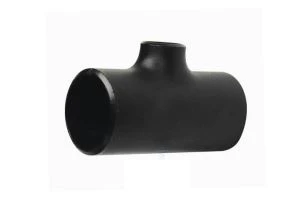
Steel Pipe Tee


Hangxin Flange: Your Professional Steel Pipe Tee manufacturer!

Cangzhou Hangxin Flange Co., Ltd. was established in 1993 and specializes in the manufacturing and export of flanges and pipe fittings. We can produce non-standard and specially designed products according to customer requirements. Our excellent quality, competitive prices, timely delivery, good reputation and many years of experience in this field make us a reliable supplier to customers all over the world.

201912021753554772263

Rich Experience

We were established in 1993 and have specialized in the manufacturing and export of flanges and pipe fittings for more than 30 years.

advanced equipment

our company equips hydraulic press machine of 3500T,CNC ring rolling machine of 2500D,7 forging hammers, 7 large bandsaw,lathes and drillers for the making of forged flanges at maximum diameter of 2800MM. 

Quality Control

These products are manufactured in accordance with international standards such as ANSI (ASME), DIN, JIS, BS, GOST, EN1092, AWWA, SABS, etc.

Global Shipping

Russia, South Korea, France, Dubai, the Middle East, Southeast Asia, Spain, Israel, Thailand, South America and other regions.


What is steel pipe tee
 
steel-reducing-tee11280205697


Steel pipe tees have three branches that can change the direction of fluid. There are T-shaped or Y-shaped, including equal-diameter tee and reducing tee (reducing tee). Tee pipes are widely used as pipe fittings. They are made from a variety of materials and are available in a variety of sizes and finishes. Tee pipes are widely used in pipeline networks to transport two-phase fluid mixtures.


How Many Types Of Steel Pipe Tees Are There?


By Connection Type There Are:

Butt weld tee

Butt welding tees are widely used in industrial pipelines such as petroleum, aerospace pharmaceuticals, chemicals, metallurgy, electric power, military industry, and engineering support. The ends are flat or beveled and connected through butt welding process. It can withstand higher pressures than other types. The size of the butt weld tee shall be specified in the pipe NPS (DN) and the thickness shall be specified in the table, where the thickness of the socket weld tee or threaded tee shall be specified in the pressure grade. Butt welding tees are divided into seamless cold drawn tees and seam welded tees during the production process.

Socket weld tee

Socket weld tee is a high-pressure pipeline connecting fitting. Like other fittings, it has a trapezoidal area where the pipe can be inserted into the tee branch and welded together. It is typically used on small diameter systems. Socket weld tees are described as NPS and are available in pressure ratings of 3000#, 6000# and 9000#, the same as threaded tees.

Threaded tee

During the manufacturing process, threaded tees have forging and casing processes. Forgings are formed by heating and forging steel ingots or round bars, and then turning threads on a lathe. Casting refers to melting the steel ingot, cooling it and pouring it into the tee mold. Depending on the socket tee form, the branch end can use external threads or internal threads. So there are externally threaded tees and internally threaded tees, and if the pipe has external threads, the tee should have internal threads.

According To Material Type, There Are:

carbon steel tee

Carbon steel tee material: ASTM A234 WPB, WPC; MSS SP-75 WPHY-42, WPHY-46, WPHY-52, WPHY-56, 60, 65 and 70. ASME/ANSI B16.9 is for butt weld tee fittings and ASME/ANSI B16.11 is for socket weld and threaded tee fittings.

Alloy steel tee

Alloy steel material: ASTM A234 WP1, WP5, WP9, WP11, WP22, WP91

Stainless steel tee

Stainless steel tees are widely used in chemical, health, food and other industries. Its advantage is that it is suitable for different working environments and has good corrosion resistance. Standards: ASTM A403 (general standard for stainless steel pipe fittings), ASTM A270 (standard for sanitary pipes). Grades: TP 304, 304L, 316, 316L, 310, 317 and 321.


steel pipe tee production process

Hydraulic bulging

Steel pipe tee hydraulic bulging is a forming process that uses axial compensation of metal materials to bulge branch pipes. The process is to use a special hydraulic press to inject liquid into a tube blank with the same diameter as the tee. At the same time, the two horizontal side cylinders of the hydraulic press are used to compress the tube blank. The volume of the tube blank becomes smaller and the tube blank is compressed. As the volume of the tube blank becomes smaller, the liquid also becomes smaller. When the pressure required for the expansion of the pipe tee branch is reached, the metal material flows along the mold cavity under the dual action of the liquid pressure in the mold. The side tube and tube blank are expanded to form branch tubes. The steel pipe tee hydraulic bulging process can be formed in one step and has high production efficiency; the wall thickness of the tee main pipe and shoulder is increased. Due to the large tonnage of equipment required for the hydraulic bulging process of seamless tees, it is currently mainly used to manufacture tees with standard wall thickness less than DN400. Suitable forming materials are low carbon steel, low alloy steel and stainless steel with low cold work hardening tendency, including some non-ferrous metal materials such as copper, aluminum and titanium.

steel-reducing-tee11183331002
steel-reducing-tee10181924649

Hot press forming

Tee hot press forming is a process in which a tube blank with a diameter larger than the tee diameter is flattened to the tee diameter. There are holes in the part of the stretched branch pipe; the tube blank is heated and put into the forming mold, and the mold of the stretched branch pipe is loaded into the tube blank; under the action of pressure, the tube blank is subjected to radial compression and radial compression. During this process, the metal flows to the branch pipes and is formed by the drawing action of the mold. The whole process is formed by the radial compression of the tube blank and the stretching process of the branch parts. Different from the hydraulic bulging tee, the metal of the hot-pressed tee branch is compensated by the radial movement of the tube blank, so it is also called the radial compensation process. Due to the use of heated tees, the tonnage of equipment required to form the material is reduced. Hot-pressed tees have wide adaptability to materials and are suitable for low carbon steel, alloy steel, and stainless steel materials; especially for tees with large diameters and thick walls, this forming process is usually used.


Causes and solutions of angle deviation during steel pipe tee manufacturing process
 

1. Steel pipe tee is prone to angle deviation, uneven surface, unequal diagonal lines of the pipe opening, and loose bite. The main reasons for this are:

1) The right angles of internal and external arcs are inaccurate. The thickness of the material itself is not considered. After the finished product is formed, the outer arc piece is short and the inner arc piece is long, which affects the angle.

2) Draw two curved planes.

3) A small hole appears in the outer corner of the outer arc of the tee.

4) The joint angles and occlusion widths are unequal, and the force on the occlusion is uneven.

2. The main prevention methods are:

1) Find the material with the correct square shape. The expansion dimensions of the tee are R1 and R2, and the width should be increased with a folding margin to prevent improper installation of the tee.

The lengths of the back and inside of the elbow are 1.57R1 and 1.57R2 respectively. Arc starting accuracy should be guaranteed.

2) After the two large pieces are unfolded, the ends of the sheet should be strictly angled. Overlap two flat plates with curvature and check the shape overlap error. Deviation is allowed.

Adjustment.

3) If a small hole appears in the outer arc corner of the tee, it can be repaired by welding with a stainless steel plate.

4) When manually biting, make sure the width is appropriate, ensure the size of the tee, and ensure even force when biting.


Application of steel pipe tee in welding
 
stainless-steel-tee13136768649
 

welding steel pipe tee

Welding is one of the most common methods of joining two pieces of metal together. Among all types of welding, tee joints are most widely used in structural welding. In this type of joint, two pieces of metal are joined together at right angles to create a T-shaped structure. T-joints can be used in different scenarios, from simple DIY projects to complex steel structure projects. In this blog post, we will explore the use of tee joints in welding and their various advantages.


steel pipe tee in pipe welding

steel pipe tee is widely used for welding pipes, especially gas and pipes. In pipe welding, a steel pipe tee connects the branch pipe to the main line. The technique used to weld steel pipe tee is fillet welding, where the weld is made at the corner of the tee. Tees in pipe welding require precision and accuracy to ensure the joints are leak-free and strong enough to support the weight of the pipe.

stainless-steel-pipe-tee05138768407
carbon-steel-tee14153330923
 

steel pipe tee in structural welding

Steel pipe tee is also commonly used for structural steel welding. Structural welding refers to the welding of metal structures such as beams, columns, and trusses. Steel pipe tees are used to connect horizontal and vertical members of a structure, such as beams and columns. These joints require strong, full penetration welds to ensure the overall structural integrity of the building.


steel pipe tee in DIY projects

Steel pipe tees are also used for simple DIY welding projects. For example, T-joints can create a simple table frame or shelf support. The simplicity of the steel pipe tee makes it an excellent choice for beginners learning basic welding techniques. T-joints can be made using various welding techniques such as MIG, TIG, and stick welding.

carbon-steel-pipe-tee06115018022


Steel Pipe Tee Maintenance Methods

1

Cleaning of Steel Pipe Tee. Solvents and emulsifiers are used to clean steel surfaces to remove oil, grease, dust, lubricants and similar organic substances. However, they cannot remove rust, oxide scale and flux on the steel surface, so they are only used as auxiliary means in anti-corrosion production.

2

Use of rust removal tools. Steel brushes and other tools are often used to polish the steel surface to remove loose or tilted oxide scale, rust, welding slag, etc. Manual rust removal tools can reach Sa2 level, and electric tools can reach Sa2 level. If there is solid oxide scale attached to the surface of the steel and the effect of the rust removal tool is not ideal, the depth of the anchor pattern required for anti-corrosion construction cannot be achieved.

3

Pickling of steel pipe tees. Pickling treatments generally use chemical methods and electrolytic methods. The anti-corrosion of steel pipe tees only uses chemical pickling, which can remove scale, rust and old coatings. Sometimes it can also be used as post-rust treatment. Surface cleanliness and roughness requirements can be achieved through sandblasting and chemical cleaning, but the anchor line is shallow and may cause environmental pollution.


201912021737132084278
 
Our factory
 

Cangzhou Hangxin Flange Co., Ltd. was established in 1993. It is located in Mengcun County, known as the hometown of elbow pipe fittings in China. It is 120 kilometers from Xingang Port to the north and 260 kilometers from Beijing Capital International Airport to the northwest, with convenient transportation. The company covers an area of more than 18,000 square meters and has fixed assets of approximately 50 million yuan.

We specialize in forged flanges and butt welded pipe fittings. The main products are butt welding flanges, flat welding flanges, blind flanges, plate flanges, socket welding flanges, lap flanges, 45/90/180 degree short radius and long radius elbows, equal diameter three Tee, reducing tee, concentric, eccentric reducer, etc.


FAQ
 

What is the purpose of steel pipe tee?

Tees connect or separate fluid flows. A tee can connect pipes of different diameters, change the direction of the pipe, or both. They are available in a variety of materials, sizes and finishes and can also be used to convey two fluid mixtures.

What is steel pipe tee?

Steel pipe tees have three branches that can change the direction of fluid. There are T-shaped or Y-shaped, including equal-diameter tee and reducing tee (reducing tee). Steel tees are widely used in pipe networks for transporting liquids and gases.

What is the ASTM standard for steel pipe tee?

Equal and reducing tees are common types of socket weld fittings, and ASTM A105 is the representative material grade for carbon steel forged fittings and flanges. They are shipped with 20GP threaded and butt weld fittings.

What is the size of steel pipe tee?

There are two outlets at 90° angles and a main connection line. It is a pipe with adjacent outlets for connecting pipes at a 90° angle. Tee fittings are used in commercial and industrial applications. They are available in many different sizes.

How is steel pipe tee made?

The key process of manufacturing steel pipe tee is to use a hydraulic press to squeeze the main pipe in the tee die (or reducing tee die). Under the huge pressure from the two pipe ends, the third branch of the tee will be squeezed. Main tubes can be seamless or welded.

How to measure steel pipe tee?

To get a truly accurate reading of pipe size, you should measure the number of threads per inch and the outside diameter (or inside diameter if it's internal pipe threads). For external pipe threads, be sure to measure the outside diameter at the widest point of the thread.

How to specify steel pipe tee?

To accurately describe the reducing tee, first identify the maximum travel size connection of the tee, such as (A = 1-1/2"). Next, indicate the opposite travel size connection to the maximum travel size connection (B = 1/2 "). The third and final dimension in a reducing tee description is always the branch side (C = 1-1/4").

What are the different types of steel pipe tee?

Straight tee, reducing tee, forbidden tee, Y-shaped tee or transverse tee and cross.

Is the tee a pipe fitting?

A tee is a pipe fitting shaped like a "T" that has two outlets connected at 90° to a single inlet. Tees are often used to combine or divert fluid flows. The inlet and outlet dimensions of a straight tee are the same.

What is the difference between extruded tee and welded tee?

A welded tee is a component that is welded into a piping system with three welds. Extruded tees are typically formed from pipe with thicker walls than required for pressure alone, by pulling a spherical form through the (red hot) wall of the pipe and then machining it.

What is the difference between a concentric reducer and a reducing tee?

A reducer is a straight connector that joins two pipes of different sizes. They have a smaller diameter on one end and a larger diameter on the other. Concentric reducers, on the other hand, taper from one end to the other to gradually reduce the diameter.

What is the volume of steel pipe tee?

The formula for pipe volume is V = πr^2h, where V is the volume, r is the pipe radius, and h is the pipe height. The pipe volume formula is commonly used to calculate the volume of a pipe when it is filled with liquid or gas or empty.

What is the equivalent length of steel pipe tee?

The equivalent length of a fitting is defined as the length of pipe that is the same size as the fitting and produces the same pressure drop as the fitting.

What is a reducing tee?

Reducing tees are used to provide high integrity mechanical connections in a variety of pumping applications. Widely used in positive pressure and vacuum applications. For use in ultra-high purity systems. It features unique machining and surface enhancements that prevent outgassing and inhibit corrosion.

What is the difference between Y-tube and T-tube?

Y-joints are similar to T-joints, but differ in that the bypass line is angled to reduce friction and turbulence. They are often used to connect vertical drain pipes to horizontal pipes. The connection is usually 45 degrees rather than 90 degrees. If the branches are further apart, at 90 degrees, the accessory will be a combo t-shirt.

What is a threaded tee?

Stainless steel threaded tees are used to connect 3 pipes that intersect at one point. It can also be used to combine flows from two inlets to one outlet or for mixing liquids.

What is a branch tee?

A tee is a T-shaped fitting with an internally threaded outlet that connects at 90° to an externally threaded main pipe. It is a short length of hexagonal tube with a side outlet. Tee is used to connect externally threaded pipes of the same diameter or to change the direction of the pipe.

What is the difference between prohibited three-way and ordinary three-way?

The blocking tee is a special type of tee whose design is similar to that of an ordinary tee with a blocking plate added to the outlet of the branch pipe. In a pig transmitter or receiver system, use a blocking tee to ensure the pig can safely pass tree branches. There is no international standard size for bar tees.

What is the difference between equal diameter tee and unequal diameter tee?

Also reduce the branches connecting the pipes to have the same size. In a unequal diameter tee, the ends of the tee are of different sizes and are used to connect two pipes of different sizes.

How to know if the steel pipe tee is changing diameter?

Note that two tees are installed. One is called a straight tee and the other is a reducing tee. On a straight tee, all three outlets have the same nominal pipe size. The pipe size of the branch pipe of the reducing tee is smaller than that of the header.


As one of the most professional steel pipe tee manufacturers and suppliers in China, we're featured by quality products and good service. Please rest assured to buy steel pipe tee made in China here from our factory.

Steel Equal Tee, Stainless Steel Tee

(0/10)

clearall