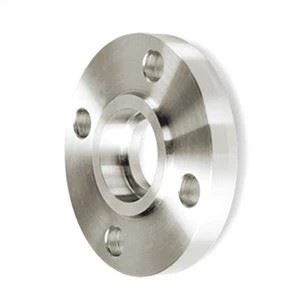
Stainless Steel Flange

CANGZHOU HANGXIN FLANGE CO., LIMITED: Your Professional Stainless Steel Flange Manufacturers!
 

CANGZHOU HANGXIN FLANGE CO., LIMITED, founded in 1993, is engaged in the manufacture and export of flanges and pipe fittings. We specialize in forged flanges and butt-welded pipe fittings. The main products we sell are welding neck flanges, slip-on flanges, blind flanges, plate flanges, socket welding flanges, lap joint flanges, the elbow of short and long radius in 45/90/180 degrees, equal and reducing tee, concentric and eccentric reducer and cap.


Why choose us?

Reliable Product Quality

Our products are made according to international standards such as ANSI(ASME), DIN, JIS, BS, GOST, EN1092, AWWA, and SABS. We have also passed the ISO quality certification system as well as international certification CE, 3A.

Advanced Equipment

Our company equips a hydraulic press machine of 3500T, a CNC ring rolling machine of 2500D,7 forging hammers, 7 large bandsaws, lathes, and drillers for the making of forged flanges at a maximum diameter of 2800MM.


Competitive Price

With an efficient sales team, we provide competitive prices for customers around the world to achieve win-win.

Professional service 

Full-time after-sales personnel provide services 24 hours a day. If any problems occur during the use of the device, users can contact us.

 

First 123 Last 1/3

What is a Stainless Steel Flange?


Stainless steel flange is a disc-shaped component. A flange can also be a plate or ring to form a rim at the end of a pipe when fastened to the pipe. It is most used in pipelines. As for stainless steel flanges used in the stainless steel pipes. Different types of flanges have different functions. Blind flanges are used for covering or closing the end of pipes/tubes. Flange joints are used in connecting pipes.


Functions of Stainless Steel Flange
 

Connecting Pipes

Stainless steel flanges are used to join two pipes or pipe components, creating a strong and reliable connection. This connection is vital for fluid transport, be it in industrial applications, petrochemical plants, or residential plumbing.

Providing Easy Access

Flanges are equipped with bolt holes, allowing for easy installation and maintenance. When maintenance or repairs are needed, flanges make it simpler to disassemble and reassemble the piping system.

Enhancing Strength and Stability

Flanges provide additional support and stability to the piping system, particularly in high-pressure applications. They distribute the load evenly, preventing stress concentration and potential pipe failures.

Sealing and Leak Prevention

The tight sealing offered by flanges is essential for preventing leaks, making them suitable for applications where leakage can be disastrous, such as in the chemical, oil, and gas industries and many more.


Advantages of Stainless Steel Flange

Stainless steel flanges are corrosion-resistant
Internal corrosion often occurs in oil pipeline systems due to the liquid and gas flow. It is a concern for the oil and gas industry. It results in a yearly cost of roughly $9 billion for the U.S. economy. Compared to other common carbon steel options, stainless steel is highly corrosion resistant, making it a top choice for pipe fittings and flanges in this industry when media is a concern.


Stainless Steel flanges are versatile
Stainless steel is known for its ability to become flexible and can be modified by adding various materials such as nickel, nitrogen, or molybdenum to enhance its properties. It also comes in various sizes, shapes, and types to suit different applications, providing versatility in design and installation.


Stainless Steel flanges can withstand high temperatures and Pressure
Stainless steel flange fittings can resist high temperatures and pressure that vary according to the grade of metal used. For instance, the proper flange and flange wall thickness in the ASTM A182 category can withstand corrosion, as well as extreme temperatures reaching 500 to 800 degrees Celsius. To summarize, stainless steel flanges come in various metal grades that provide varying levels of resilience to high temperature and pressure conditions.


Stainless Steel flanges offer sustainability
Stainless steel flange fittings have a naturally shiny and refined appearance that does not require additional coating or lining for protection against corrosion, making them an environmentally responsible choice.


If you select a substitute for your bolts and flanges, remember that this material can be recyclable. About half of the stainless steel produced domestically is obtainable from recycled material, making these flange fittings an excellent choice for minimizing the environmental impact of a job.


Types of Stainless Steel Flange?
Stainless Steel Pipe Fitting Flange Price
Carbon Steel Plate Flanges
2 Inch Stainless Steel Flange
Stainless Steel Forged Flanges

Weld Neck Flanges: These flanges are distinguished by their protruding necks. The weld neck flanges have the same bevel and thickness of the pipe. This flange is considered for severe service conditions such as sub-zero or high temperatures and high pressure.
Slip-On Flanges: These are the most affordable varieties of flanges available for purchase. The slip–on flanges have a slightly larger diameter than the pipe, which makes it easier to slip them over the pipe. These stainless steel flanges are fillet welded to a position and are ideal for low-pressure applications.
Blind Flanges: The flanges are designed without a bore, and are used to seal vessel openings or piping systems. These flanges are ideal for piping systems or vessels that require regular inspection. The blind flanges can be supplied with or without hubs. This flange can easily handle high stress caused due to internal pressure.
Threaded Flanges: These types of flanges are used for special applications and can be easily assembled without welding. Stainless steel threaded flanges are compatible with pipes with external threads. The flanges are not recommended for applications where bending stresses, high pressure, or high temperatures are involved.
Lap Joint Flanges: The lap joint flanges are the type of slip-on flanges that are used with stub end fittings. These flanges are ideal for piping systems that require regular inspection and maintenance such as low alloy steel pipes or carbon steel pipes.
Socket Weld Flanges: The flanges are designed for use on small-diameter and high-pressure piping. The socket weld flanges have internal welds which contribute to their durability as well as fatigue strengths. These flanges are used in the chemical processing industry.
Orifice Flanges: The function of these steel flanges is to provide access to a line for metering liquids or gases. The orifice flanges are installed with orifice plates or flow nozzles.
Ring–Type Joint Flanges: These flanges are used for high-pressure and temperature applications. The ring-type joint flanges feature a groove that can be easily compressed on blind, slip-on, or weld neck flange. The flanges help avoid leaks in pipelines where media is transferred at high pressure and high temperature.


Stainless Steel Weld Neck Flange


What Applications Are Stainless Steel Flanges Used For?

Stainless steel flanges and fittings are used in residential, commercial, and industrial piping systems. The strength, corrosion resistance, and ability to withstand high temperature, pressure, and flow make stainless steel a common choice for the transport of gasses or liquids, for chemical processing, in maritime applications, for sanitary use, and where corrosion resistance is required.


How to choose the Right Stainless Steel Flanges?


Operating Environment
The metal alloys or combined metals are forged from a combination of steel and other metals such as chromium and nickel. Steel’s anti-corrosive properties and versatility make it vital in countless applications in industries such as construction, automobiles, food and beverage, medical, and chemical processing, to name a few.

You need to find a steel grade that will uphold the best in a given environment. Think about the conditions that the steel product will face. High temperatures, varying pH levels, stress, and corrosion may impact the functionality of your steel. Austenitic grades such as 302 stainless steel, 304, and 316 series retain their strength, corrosion resistance, and toughness properties in a broad temperature range.

Mechanical Qualities
Next, you may need to give importance to mechanical qualities, such as strength, ductility, and toughness. Strength refers to the stress that a metal can withstand before deforming or fracturing. Ductility relates to the ability of a metal to have its shape changed. Toughness is the ability to deform and absorb energy before a metal fracture.

Corrosion Resistance
While stainless steel gets a good rap for being corrosion-resistant, it varies greatly among the different grades. Austenitic grades such as 316, 304, and 302 stainless steel are among the most sought-after for corrosion resistance due to high levels of chromium. Ferritic steel grades and martensitic are more affordable but will have fewer percentages of nickel and chromium.

Formability
If the application of the stainless steel casts requires good formability, it would be wise to avoid martensitic grades. These grades often tend to be brittle and not formable. Austenitic grades such as 304 stainless steel or 302 stainless steel would be an excellent choice. Ferritic grades such as 430 can also work.

Material Cost and Availability
You may need to find out the common applications of the different grades of steel to help you choose the right one for your project. Alloy 302 stainless steel is commonly used in stamping and spinning. Ferritic grade 409 is majorly in automotive exhaust systems, while austenitic 316L is for chemical applications that require welding. Austenitic steel grades are usually the most expensive upfront. Carefully examine the cost, needs, and availability of the thin sheet metal before settling for one.


Precautions For Using Stainless Steel Flange
 

The first point, avoid corrosion of stainless steel flange material
It is more important to keep the surface clean of stainless steel flanges. Once corroded, the surface of stainless steel will change its appearance and become less smooth. So everything that can corrode stainless steel should be far away from the production, acid and alkaline gas or liquid should be far away from the production environment.


Second, choose the collocation of the stainless steel flange gasket
Stainless steel flanges play a great role in connecting pipes, but gaskets are indispensable, asbestos gaskets are a good helper of stainless steel flanges. Asbestos has good properties and can resist acidic substances. Gases and liquids are well absorbed by asbestos, so stainless steel will not be affected. Of course, on some special occasions will also be used in other materials gasket, at this time, need to choose stainless steel with complementary capabilities of the gasket.


Third, flange production should take into account the connection
There are different ways to connect the pipe. If the pipe is very thin, you can use a threaded flange to directly screw the connection. Some stainless steel flanges need to face some pipes with great pressure, so they need to be welded, more solid and reliable. The flange made of stainless steel material is the best choice of welding connection, whether it is high pressure or small-pressure pipeline, a stainless steel welding connection is very convenient and easy.


Our Factory


productcate-1-1
productcate-1-1
productcate-1-1


Our Certificate


productcate-1276-330


FAQ


Q: Can stainless steel flanges be used in corrosive environments, such as chemical processing plants?

A: Yes, stainless steel flanges are an excellent choice for corrosive environments. They are known for their superior corrosion resistance.

Q: Are stainless steel flanges suitable for high-temperature and high-pressure applications?

A: Yes, stainless steel flanges are well-suited for high-temperature and high-pressure applications. They maintain their structural integrity and mechanical properties under extreme conditions.

Q: How do stainless steel flanges contribute to product integrity in the food and beverage industry?

A: Stainless steel flanges play a critical role in maintaining the purity and cleanliness of food and beverage products. They do not react with food or beverages, ensuring that the end products remain uncontaminated and safe for consumption.

Q: Are there any maintenance practices to keep stainless steel flanges in optimal condition?

A: Regular maintenance practices for stainless steel flanges include inspections for signs of wear or corrosion, cleaning to remove contaminants, and ensuring proper torque on bolts and fasteners.

Q: What are some common issues that may arise with stainless steel flanges, and how can they be addressed?

A: Common issues with stainless steel flanges may include leaks and corrosion. Leaks can often be resolved by tightening bolts or replacing gaskets, while corrosion can be mitigated through proper material selection and routine maintenance. Addressing these issues promptly is crucial to prevent system failures.

Q: Which Standards Apply to Stainless Steel Flanges and Fittings?

A: A variety of standards establish the required chemical composition, dimensions, pressure ratings, and other requirements of flange and fitting materials for piping systems. The standards most often applied to stainless steel include:
AWWA C228 sets the minimum material requirements and dimensions for stainless steel flanges used in stainless steel piping systems
ASTM A182 covers forged or rolled piping system components intended for high-temperature service
ASME B16.5 is a dimensional standard applied to pipe flanges and flange fittings, including stainless steel
ASME B16.34 is a pressure/temperature rating applied to threaded and welded valves used to connect flanges
ASME B16.47 is specific to large-diameter steel and stainless steel flanges

Q: What Does the L Mean in Stainless Steel?

A: Stainless steel is available in 304 and 304L and 316 and 316L. The L designates stainless steel with a lower carbon content than the standard 304 or 316, so it is softer and offers improved weldability. Each of these options—304, 304L, 316, and 316L—offers corrosion resistance and high tensile strength, but 304L and 316L are more corrosion-resistant than 304 or 316.
Dual grade 304/304L or 316/316L stainless steel material meets more than one standard. For example, 304/304L stainless steel’s chemical composition meets the certification requirements for 304L stainless steel and the requirements for 304 stainless steel. Dual-grade stainless steel conforms to AWWA C228 specifications.

Q: How to choose a stainless steel flange?

A: When choosing stainless steel flanges, fittings, and accessories, you’ll need the appropriate grade to suit your intended application. The most common options are 304 and 316 stainless steel, which are preferred for strength even under heavy stress. However, the correct grade of stainless steel is necessary to ensure it can withstand the intended use. Using an incorrect grade at high temperatures may result in warping or otherwise compromise the piping system. Choosing the appropriate grade to suit the intended application helps prevent piping system damage or early failure.

Q: What are the advantages of stainless steel flange?

A: Stainless steel flanges are strong, durable, and highly corrosion-resistant. They are also non-magnetic and hygienic.

Q: When should I use stainless steel flanges?

A: Stainless steel flanges should be used in applications where high corrosion resistance is required, such as in the chemical, food processing, and pharmaceutical industries.

Q: When should I not use stainless steel flanges?

A: Stainless steel flanges are more expensive than other types of flanges, so they should not be used in applications where cost is a major consideration and where corrosion resistance is not required.

Q: How to choose the materials for the stainless steel flange?

A: Stainless steel flanges are available in 316 stainless steel (CF8M), 347 stainless steel (CF8C), 304 stainless steel (CF8), 304L stainless steel (CF3), and 316L stainless steel (CF3M).
316 stainless steel (CF8M)
Corrosive or ultra-low temperature or high-temperature non-corrosive applications;
Temperature range: -268 ℃ to +649 ℃, the temperature above +425 ℃ must specify a carbon content of 0.04% and above.
347 stainless steel (CF8C)
Mainly used in high-temperature and corrosive applications;
Temperature range: -268 ℃ to +649 ℃, the temperature above +540 ℃ must specify a carbon content of 0.04% and above.
304 stainless steel (CF8)
Corrosive or ultra-low temperature or high-temperature non-corrosive applications;
Temperature range: -268 ℃ to +649 ℃, the temperature above +425 ℃ must specify a carbon content of 0.04% and above.
304L stainless steel (CF3)
Corrosive or non-corrosive applications; the temperature range up to + 425 ℃.
316L stainless steel (CF3M)
Corrosive or non-corrosive applications, temperature range up to + 454 ℃.

Q: What is stainless steel 304 flanges?

A: The SS 304 WNRF Flange is a weld neck raised face flange. The raised face helps the attachment while the welded neck provides extra grip to hold the pipes in place. The flanges vary in size ranging from ½ inches to 48 inches in diameter.

Q: Why choose stainless steel 304?

A: 304 stainless steel is durable and corrosion and oxidation-resistant, meaning it can endure average exposures. Its melting point ranges from 2,550° F to 2,650° F, allowing it to withstand very high temperatures. 304 is also valued for its high tensile strength of about 621 MPa (90 ksi).

Q: How are stainless steel flanges made?

A: Forging, casting, cutting, and rolling are the most common flange manufacturing processes. Casting and forging flanges offer the advantage of having proper shape, size, and inexpensive costs, as well as requiring a simple technique.

Q: What grade is a stainless steel flange?

A: Stainless steel flange simplified as SS flange, refers to flanges that are made of stainless steel. Common material standards and Grades are ASTM A182 Grade F304/L and F316/L, with pressure ratings from Class 150, 300, 600, etc, and to 2500.

Q: What is the ASTM standard for stainless steel flanges?

A: Flanges made of stainless steel are referred to as "stainless steel 304 flanges," also abbreviated as "SS 304 flange." Common material standards and grades include ASTM A182 Grade F304/L and F316/L, with pressure ratings ranging from Class 150 to 2500 and 300 to 600, respectively.

Q: Why Do Flanges Have a Raised Face?

A: A flange is a raised face that allows for quick and easy coupling of two objects. Flanges are typically used in the piping industry to connect pipes or fit together with fasteners so that they can be securely connected using not just one joint, but rather several joints. This type of connection provides added stability when it comes to high-pressure applications, which require a secure connection to be maintained.

Q: What are stainless steel flanges used for?

A: Stainless steel flanges are fillet welded to a position and are ideal for low-pressure applications. Blind Flanges are designed without a bore and are used to seal vessel openings or piping systems. These flanges are ideal for piping systems or vessels that require regular inspection.

Q: Would there be any problems if we connect a carbon steel flange to a stainless steel flange?

A: Galvanic corrosion is the reason connecting carbon and stainless steel can lead to problems. Galvanic corrosion is when one metal causes another metal to corrode and break down.

As one of the most professional stainless steel flange manufacturers and suppliers in China, we're featured by quality products and good service. Please rest assured to buy stainless steel flange made in China here from our factory.

stainless steel flange documentation, stainless steel flange validation, stainless steel flange data sheet

(0/10)

clearall