




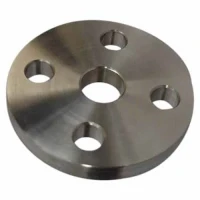
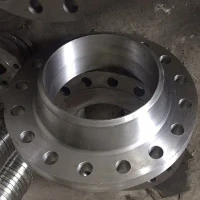
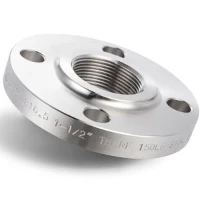
GOST33259 PN16 Slip On Flange
This forged steel pipeline connector is designed for building services, fire protection systems, and general industrial piping operating at pressures up to 1.6 MPa. The slip-on type simplifies field installation—it slides over the pipe end and requires only two fillet welds, reducing alignment time and labor costs compared to butt-weld alternatives. Available in carbon steel (A105, St20, Q235) and stainless grades (304, 316L), with sizes ranging from DN15 to DN2000 and RF or FF facing options. Manufactured under ISO9001-certified processes, each piece is traceable from raw material to final inspection. We supply to projects across Russia, the CIS, the Middle East, and Southeast Asia, with full documentation support including material test reports and GOST compliance certificates. Custom sizes and special markings are available on request.
What Is This Flange and Why Does It Matter?
If you work with industrial or building piping systems, you've likely encountered the question: which flange type balances cost, installation speed, and long-term reliability for a standard-pressure project? The GOST33259 PN16 Slip On Flange is one answer that has stood the test of time across Russian, Eastern European, and Middle Eastern markets. It slides over the pipe end and is secured with two fillet welds-one inside, one outside. This design doesn't pursue extreme performance, but it delivers consistent sealing under pressures up to 16 bar (1.6 MPa) across temperatures ranging from -40°C to +200°C, depending on material selection.

Where this flange truly shines is in field assembly. Unlike weld neck flanges that require precise end preparation and exact alignment, a slip-on design tolerates minor misalignments during installation. For contractors working with large-diameter pipes in tight spaces-say, a pump room retrofit or a municipal water line repair-this forgiving nature translates directly into fewer reworks and faster project completion. The raised face (RF) sealing surface, standard on most variants, ensures a tight seal with appropriate gaskets, handling both liquid and gaseous media in building services, fire protection loops, and light industrial processes.
Technical Breakdown: What Makes It Work?
The reliability of this flange isn't accidental-it's built into the manufacturing process. We start with forged carbon steel (ASTM A105, St20, or equivalent) or stainless grades (304, 316L), which are heated and shaped under our 3500T hydraulic press and 2500D CNC ring rolling equipment. Forging aligns the metal grain structure along the flange's contours, which improves resistance to impact and pressure surges compared to cast alternatives.
Machining precision is where the seal becomes real. Our CNC lathes and drilling machines maintain bolt hole circularity within ±0.5mm and facing flatness to 0.05mm per 100mm diameter-specs that meet or exceed GOST 33259 requirements. The surface finish on the RF face is kept between 3.2 and 6.3 micrometers Ra, a range that accommodates standard spiral-wound or rubber gaskets without requiring extra surface treatment.
Heat treatment follows forging: normalizing or annealing relieves internal stresses developed during shaping, ensuring dimensional stability during subsequent machining. Every batch undergoes hardness testing (typically 120-180 HB for carbon steel grades) and, when specified, impact testing at -40°C for cold-climate applications. These are not just internal checks-they're documented in the material test reports we supply with each shipment.
Below is the full list of technical specifications for this product. For non-standard requirements beyond these parameters, we also offer customization services.
|
Parameter |
Specification Details |
|
Standard |
GOST 33259 |
|
Pressure Rating |
PN16 (Nominal Pressure: 1.6 MPa / 16 bar) |
|
Flange Type |
Slip-On (weld neck option also available) |
|
Size Range |
DN15 – DN2000 (1/2″ – 48″) |
|
Common Materials |
Carbon Steel: A105, St20, Q235B, 20# |
|
Facing Type |
RF (Raised Face) – standard |
|
Connection Method |
Two fillet welds (internal + external) |
|
Manufacturing Process |
Forged + CNC machined |
|
Surface Treatment |
Rust-preventive oil (standard), transparent lacquer, black paint, hot-dip galvanized, or as specified |
|
Marking Content |
Size, pressure rating, material grade, heat number, manufacturer's trademark |

Economic Perspective: Value Beyond the Price Tag
Let's talk numbers honestly. The initial purchase price of a slip-on flange is typically 15-25% lower than an equivalent weld neck flange, primarily due to reduced material consumption and simpler machining. But the bigger savings often come during installation. A qualified welding crew can complete a slip-on joint in roughly two-thirds of the time required for a weld neck connection-no beveling, minimal alignment effort, and single-pass fillet welds instead of multi-pass butt welds. On a project with 500 flanges, that difference can shave several days off the construction schedule.
From a maintenance standpoint, this flange type offers straightforward replacement. If corrosion or mechanical damage requires cutting out a section, the slip-on design's straight hub and simple weld geometry make removal and reinstallation less labor-intensive than more complex designs. Of course, this economic advantage comes with a boundary: for systems with severe vibration, frequent thermal cycling, or pressures approaching the PN16 limit, the weld neck flange's superior fatigue resistance becomes the safer-and ultimately more economical-choice over the installation's full lifecycle. We routinely advise clients to assess their operating conditions before selecting, and we can supply both types as needed.
Market Context and Geographic Relevance
The GOST standard originated in Russia and remains mandatory across most of the former Soviet Union, including Belarus, Kazakhstan, and Ukraine, as well as influencing specifications in parts of Eastern Europe and the Middle East. For procurement teams in these regions, compliance with GOST 33259 isn't optional-it's a regulatory requirement for equipment acceptance. When you're sourcing a GOST33259 PN16 Slip On Flange, understanding the local inspection practices and documentation expectations is just as important as the product's dimensional accuracy.
Our factory's location in Mengcun County, Hebei Province, places us in China's most concentrated pipe fittings industrial zone. Within a 50-kilometer radius, we have access to certified steel mills, specialty heat treatment shops, and logistics providers handling container freight to Tianjin Port (120 km north). This supply chain density means we typically maintain finished stock on common sizes (DN50-DN600) and can mobilize production for larger diameters (up to DN2000) within 15 working days. For buyers in Russia or the Middle East, this responsiveness matters as much as the product itself-especially when project schedules are tight.
Production Workflow: From Billet to Seaworthy Package
Here's a step-by-step view of how we transform raw steel into a finished flange ready for international shipping:
Raw material receiving
Each steel bar or billet arrives with a mill certificate; we verify chemistry using a portable spectrometer and record heat numbers for full traceability.
Cutting and heating
Material is cut to approximate weight and heated in gas-fired furnaces to forging temperature (typically 1150-1200°C for carbon steels).
Forging and ring rolling
The heated billet is first upset and pierced, then rolled into ring form on our 2500D CNC ring rolling machine. This step creates the concentric shape with uniform wall thickness.
Heat treatment
Rings are placed in a controlled-atmosphere furnace for normalizing (850-900°C, air-cooled) to relieve stress and refine grain structure.
Rough machining
The outer diameter, inner bore, and thickness are roughed out on vertical lathes.
Finish machining
The sealing face, bolt circle, and hub profile are precision-machined on CNC lathes. Bolt holes are drilled on dedicated radial drilling machines using jigs for accurate pitch circle diameter.
Inspection
Dimensional checks (OD, ID, thickness, bolt circle, facing flatness), visual inspection for surface defects, and thread verification.
Surface treatment
Options include rust-preventive oil (standard), transparent lacquer, black paint, or hot-dip galvanizing (for outdoor or high-humidity applications).
Marking and packaging
Each flange is stamped with size, pressure rating, material grade, and heat number. Wooden pallets or crates are used for export, with inner rust-preventive wrapping.
Every operation is logged in production records, and we offer third-party inspection (e.g., SGS, BV) at the client's request before dispatch.
Service Commitment: What We Actually Deliver
Over the years, we've learned that reliable supply involves more than just making flanges. Here's what our regular clients expect from us:
Technical consultation
We answer questions about material equivalence (e.g., St20 vs. ASTM A105), gasket selection, and welding procedure recommendations before orders are placed.
On-time dispatch
Our logistics team tracks vessel schedules from Tianjin and Qingdao ports to key destinations like Novorossiysk, Jebel Ali, and Bangkok, and we communicate any potential delays proactively.

Flexible batch sizing
Whether it's 10 pieces for a maintenance job or 500 pieces for a new plant, we adjust production runs accordingly.
Complete documentation
Every shipment includes the material test report, dimensional inspection record, and commercial documents (invoice, packing list, bill of lading) required for customs clearance.
A Real Project Example
In early 2025, an engineering contractor in Kazakhstan needed DN150 PN16 slip-on flanges for a district heating network expansion. Their initial supplier had production delays, and the winter installation window was closing. We received their inquiry on a Thursday, confirmed material availability (carbon steel, RF face, oil-coated) the same day, and shipped 320 pieces from Tianjin the following Wednesday-airfreight to Almaty arrived within five days. The client's quality team inspected the shipment upon arrival and confirmed dimensional compliance with GOST 33259. They subsequently placed repeat orders for three additional phases of the same project.
Get a Quote or Technical Review
If you're specifying flanges for an upcoming project, we can provide:
Current pricing for standard sizes (DN15-DN2000)
Material availability checks for carbon and stainless grades
Estimated lead times based on your quantity and destination
Sample drawings for non-standard custom requests
Whatever your pressure and temperature conditions, we can help you confirm whether the GOST33259 PN16 Slip On Flange is the right fit-or recommend an alternative if your system demands higher fatigue resistance.
Contact Sandy directly-she handles export inquiries and can address your technical or commercial questions.
Contact Sandy:
Email: sandy@yongxingflange.com
WhatsApp/WeChat: +86-15127785550
Skype: sandy198607
Frequently Asked Questions
Q1: Are GOST flanges compatible with ANSI or DIN piping systems?
A: Not directly-bolt circle diameters, hole sizes, and facing dimensions differ between standards. You'll need an adapter or a custom-machined flange if you're connecting GOST to ANSI/DIN. We regularly produce flanges with GOST dimensions on the sealing face and ANSI bolt patterns on request, so it's worth asking if you have a mixed-standard system.
Q2: What's the actual difference between St20 and ASTM A105 for this pressure rating?
A: They're chemically similar but not identical. St20 (Russian grade) has slightly lower manganese and higher carbon limits than A105. For PN16 service at ambient temperatures, either works fine. The practical difference is documentation-some Russian inspectors require St20 certificates even if A105 is mechanically equivalent. We can supply material test reports for either grade, and we often keep both in stock.
Q3: Do you have experience shipping to remote Russian regions like Yakutia or Magadan?
A: Yes-we've shipped to several Far East and Siberian locations through Vladivostok port, then via rail or winter road. The main challenge is the short navigation window for sea delivery to northern ports (July-October). For these destinations, we recommend placing orders at least 4 months ahead of the required date. We can also arrange airfreight to regional airports like Khabarovsk or Irkutsk, though costs are significantly higher. If you're working on a project in these areas, let us know early-we'll build the logistics buffer into your delivery schedule.
Q4: What's the difference between buying from China vs. Ukraine or Turkey for GOST flanges?
A: Each source has trade-offs. Ukrainian manufacturers historically had direct GOST experience but production capacity has been disrupted. Turkish suppliers offer shorter sea routes to Black Sea ports but typically price 18-25% higher than Chinese equivalents for the same grade. Our advantage is scale-we produce 13,000 tons annually across multiple standards, so we maintain dedicated production lines for GOST sizes. For projects requiring 200+ pieces, we're usually the most cost-effective option without compromising on material certification.
Q5: Can you provide the full package of Russian acceptance documents?
A: Yes-we routinely supply the documentation package required by Russian customs and project acceptance committees. This includes the original material test report (with heat numbers), dimensional inspection certificate, pressure test certificate (if applicable), and a certificate of conformity to GOST 33259. For projects requiring Gosgortekhnadzor (now Rostechnadzor) approval, we can also arrange third-party certification from an accredited Russian inspection body-though this adds 2-3 weeks and additional cost. We recommend clarifying document requirements at the quotation stage.
Q6: How do you handle flange marking for Russian projects?
A: Russian standards require specific marking content: nominal size, pressure rating, material grade, heat number, and the manufacturer's trademark. We stamp this information in Cyrillic or Latin as specified. Some clients also require a barcode or QR code for their internal asset tracking. We've customized marking for several Russian oil and gas contractors-just send your marking specification with the order, and we'll set up the stamping tool accordingly.
Q7: Can I use a spiral-wound gasket with the RF face on this flange?
A: Yes, but pay attention to the gasket inner diameter. For a slip-on flange, the gasket ID should match the pipe ID, not the flange bore. If the gasket ID is too small (sized to the flange bore), it creates a ledge that traps sediment and accelerates localized corrosion. We've seen this mistake on site inspections-it's worth double-checking your gasket selection.
Q8: What certifications do you hold that are recognized in Russia and the CIS?
A: Beyond ISO9001, we've obtained CE marking (for European projects) and we're in the process of renewing our GOST R certification. For current projects, we can provide a certificate of compliance issued by an accredited Chinese testing laboratory that is recognized under the China-Russia mutual acceptance agreement for industrial products. If your project specifically requires EAC (Eurasian Conformity) marking, we can arrange this through our partner certification body-lead time is approximately 4-6 weeks for the initial product batch.
Q9: What happens if I over-torque the bolts on a PN16 slip-on flange?
A: Over-torquing can deform the RF face, especially in softer carbon steel grades. Once the face is warped beyond 0.2mm flatness, the gasket won't seal properly even with new gaskets. The typical bolt torque for M20 bolts on PN16 flanges is around 200-250 Nm-we always tell our clients to use a calibrated torque wrench and follow a star pattern when tightening.
Q10: Do you have reference clients in Russia or Kazakhstan we can contact?
A: We've supplied to multiple contractors in the Russian oil and gas sector, as well as municipal water authorities in Kazakhstan. While we cannot share client contact details without their permission, we can provide reference letters with company names and project scopes (redacted for commercial sensitivity). We can also arrange a call with our export manager who handled those projects-he can discuss the specific delivery and quality arrangements made for those contracts.
Regions served: Russia, Kazakhstan, Belarus, Ukraine, Uzbekistan, Azerbaijan, Georgia, Armenia, Moldova, Turkmenistan, Tajikistan, Kyrgyzstan, Mongolia, Middle East, Southeast Asia
Shipping ports used: Tianjin Xingang (China) → Novorossiysk, St. Petersburg, Vladivostok, Aktau, Jebel Ali, Bangkok
Hot Tags: gost33259 pn16 slip on flange, China gost33259 pn16 slip on flange manufacturers, suppliers, factory, leakproof steel flange, steel flange exporter, non standard steel flange, gb steel flange, cast steel flange, Reducing Tee Pipe Fitting



Send Inquiry
