



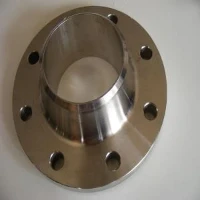
DN50 ANSI Slip On Steel Flange
Let's be honest – not every piping connection needs an over-engineered solution. Sometimes you just need a flange that goes on fast, seals tight, and doesn't cost a fortune. Need to connect a 2-inch pipe quickly without complicated prep work? That's the job this flange is made for. The DN50 ANSI Slip On Steel Flange – a Class 150 forged carbon steel fitting – slides right over the pipe end, gets welded inside and out, and forms a solid, permanent joint. No beveling, no finicky alignment – slide it on, weld it, and you're done. It won't win any beauty awards, but for straightforward, reliable connections, it's tough to beat.
What Exactly Is This Flange and Why Would You Use It?
Let's be honest – not every piping connection needs an over-engineered solution. Sometimes you just need a flange that goes on fast, seals tight, and doesn't cost a fortune. Need to connect a 2-inch pipe quickly without complicated prep work? That's the job this flange is made for. The DN50 ANSI Slip On Steel Flange – a Class 150 forged carbon steel fitting – slides right over the pipe end, gets welded inside and out, and forms a solid, permanent joint. No beveling, no finicky alignment – slide it on, weld it, and you're done. It won't win any beauty awards, but for straightforward, reliable connections, it's tough to beat.
Why Choose This Flange Over Other Options?
Practical, dependable, and built for the jobs that don't need over-engineering.
Simple Installation Saves Time and Money
Here's the main reason people pick slip-on flanges: they're easy to work with. Unlike weld neck flanges that need the pipe end to be cut and beveled to exact specs, a slip-on flange just needs the pipe to slide in. Your welder can get it positioned and tacked in place quickly, then run the fillet welds on both sides. Less prep time means lower labor costs, period.
Solid Performance for Moderate Demands
This isn't a flange for extreme pressures or temperatures, and it's not trying to be. The forged carbon steel construction (ASTM A105) gives you reliable strength for Class 150 applications, while the raised face design provides a solid sealing surface. Think of it as the everyday workhorse – not flashy, but dependable for the vast majority of standard industrial and commercial systems. The DN50 size (2 inches) also hits that sweet spot where it's large enough to be useful but small enough to be economical.
Technical Specifications – What Each Number Means for Your System
|
Parameter |
Specification |
What It Means for You |
|
Product Name |
DN50 ANSI Slip On Steel Flange |
This is the exact component you're ordering – DN50 (2-inch) size, slip-on style, carbon steel construction. No ambiguity, no wrong parts. |
|
Standard |
ASME/ANSI B16.5 |
This is the globally recognized standard for pipe flanges and fittings – and we manufacture to it right here in China, so you get consistent quality at competitive pricing. It means the dimensions, tolerances, and pressure ratings are verified – so this flange will bolt up to any other Class 150 component without modification. |
|
Size |
DN50 (2 Inch) |
DN50 is the metric equivalent of 2-inch nominal pipe size. It's a common size for moderate-flow applications – large enough to move useful volumes, small enough to keep component costs reasonable. |
|
Pressure Rating |
Class 150 LB |
Class 150 is the most common pressure class for industrial piping. It's rated for working pressures up to 285 PSI at ambient temperature (derated at higher temps). For most HVAC, water, and low-pressure process systems, this is the right choice – and it keeps costs down compared to higher-rated flanges. |
|
Flange Type |
Slip-On (SO) |
The flange slides over the pipe end rather than butting up against it. This design is faster to install because the pipe doesn't need precise beveling – your fitter just slides it on and welds. It's the most cost-effective flange type for non-critical applications. |
|
Face Type |
Raised Face (RF) |
The raised face (typically 1/16″ high for Class 150) concentrates gasket pressure into a small area, creating a tighter seal with less bolt torque. This is the standard face for most industrial flanges – gaskets are readily available and installation is straightforward. |
|
Material |
Forged Carbon Steel, ASTM A105 |
ASTM A105 is the standard specification for forged carbon steel piping components. It offers good strength (yield ≥ 36 KSI) and excellent weldability. It's the go-to material for moderate-temperature and pressure services, and it's widely available, which keeps lead times short and costs predictable. |
|
Process Method |
Forged |
Forging aligns the grain structure of the steel, giving the flange better impact resistance and strength than cast alternatives. The process also reduces internal porosity – meaning fewer hidden defects that could lead to leaks under pressure. |
|
Bore Size |
Slightly larger than DN50 pipe OD |
The bore is intentionally oversized to allow the pipe to slide in freely. This clearance makes installation quick but also means the pipe-to-flange connection relies on the fillet welds for strength – which is standard for this flange type. |
|
Hub Type |
Low Hub |
The low hub profile keeps the flange compact and reduces material weight, which lowers both cost and shipping weight. It's less bulky than a weld neck flange but still provides enough material for the fillet welds. |
|
Surface Treatment |
Black painting or anti-rust oil |
This coating protects the flange from corrosion during shipping and storage. When you receive it, the flange is ready to install – no extra cleaning or prep needed before welding. |
|
Bolting |
4 bolt holes, 5/8″ diameter |
This matches the standard ASME B16.5 bolt circle for a 2-inch Class 150 flange. Your bolting kit is standard – off-the-shelf hardware works. No special studs or nuts required. |
All technical data and pressure ratings are based on ASME/ANSI B16.5 standards and ASTM material specifications.

Where You'll See These Installed – Industrial Automation Applications
From building automation to water treatment – wherever quick, reliable connections matter.
HVAC and Building Automation Systems
Modern buildings rely on automated HVAC systems to maintain temperature and air quality across multiple zones. The piping networks that distribute chilled and hot water need flanges that are quick to install and easy to service. Slip-on flanges are a go-to choice here – they're cost-effective, the installers know them well, and they work reliably at the moderate pressures these systems run at.
Water Treatment and Distribution
Municipal water treatment plants and industrial water systems use slip-on flanges by the dozens. Whether it's connecting pumps to piping manifolds, joining sections of distribution lines, or linking chemical feed equipment, the slip-on flange's simplicity makes it a favorite. Plus, the raised face design works well with standard gaskets to keep treated water where it belongs.
Process Control and Instrumentation
In automated production lines, you've got sensors, flow meters, and control valves scattered throughout the piping network. Slip-on flanges provide a convenient connection point for tying these instruments into the system. They're easy to install, easy to remove if maintenance is needed, and they don't require the tight dimensional tolerances that some other flange types demand.
General Industrial Piping
From compressor discharge lines to cooling water loops, slip-on flanges show up everywhere in industrial plants. They work well with carbon steel, stainless steel, and other pipe materials, and they handle the vibration and thermal expansion typical in factory environments. When you need a reliable connection that won't give you trouble, this is a solid choice.
A Peek Inside How We Make Them
Quality isn't a slogan here – it's built into every piece that leaves our shop.
It starts with material verification. Every batch of steel hits the spectrometer before it hits the production floor. If the chemistry doesn't match ASTM A105, it doesn't get used – full stop.
From there, we move to forging. The steel gets heated and shaped under pressure, which aligns the grain structure and gives the flange better impact resistance than cast alternatives.
Then comes the machining. Our CNC lathes turn the flange to its final dimensions – bore, outside diameter, raised face, hub profile. Get this right and everything else falls into place.
After that, we drill the bolt holes and counterbore them to match the Class 150 pattern. Surface treatment follows – a coat of black paint or anti-rust oil, depending on your preference – to protect against corrosion during shipping.
We finish with a thorough inspection: checking dimensions, face finish, bolt hole alignment, and overall appearance. Every lot gets this once-over, and we can provide full test documentation if your project requires it.
One of our regular buyers put it simply: "We've used other suppliers, but Hangxin's flanges consistently fit right the first time. No rework, no delays – just good parts that show up when they're supposed to." That feedback covers everything from our standard stock items to the DN50 ANSI Slip On Steel Flange – same quality, same reliability, every time.
It's the kind of feedback that tells you more than any sales pitch. When you're dealing with tight project timelines, having flanges that actually fit saves you real time and real money.


We're CANGZHOU HANGXIN FLANGE CO., LIMITED, and we've been in the flange and pipe fitting business since 1993. Over 30 years of manufacturing and exporting flanges to customers around the world – that's not a small thing.
We're located in Mengcun County, the recognized hometown of elbows and pipe fittings in China. The location gives us easy access to raw materials, a skilled workforce that's been doing this for generations, and excellent logistics – we're 120 kilometers from Xingang Port and 260 kilometers from Beijing Capital International Airport. When your flanges need to ship, they ship fast.
Our facility covers over 18,000 square meters, with fixed assets of about 50 million RMB. We run a 3500T hydraulic press, a 2500D CNC ring rolling machine, seven forging hammers, seven large bandsaws, and a full machine shop. That setup lets us produce about 13,000 tons of flanges and fittings every year.
We hold ISO9001, CE, and 3A certifications, and we maintain full traceability on every order. If you need material test reports or inspection records, we have them on file.
Let's Get You Sorted
The bottom line is this: if you need a DN50 flange that fits without drama, shows up when we say it will, and doesn't blow your budget, we've got you covered. Three decades in this trade have taught us what matters – consistent quality and straight answers. Stock orders? We usually ship the same day.
Need something outside the standard? Different size, higher pressure class, stainless instead of carbon – send over your specs and we'll get back to you with a quote within 24 hours. Custom or off-the-shelf, we're here to make it work. No runaround, no surprises.
How to reach us
INQUIRY CONTACT PERSON :
Sandy Zhang
Email : sandy@yongxingflange.com
Phone/Wechat/Whatsapp:+86 15127785550
Skype: sandy198607
Address: DingZhuangZi Industrial Zone, Mengcun County, Cangzhou City, Hebei Province, China

Frequently Asked Questions
Q1: Why would I pick a slip-on flange over other types for a standard piping job?
Two main reasons – speed and cost. Installing a slip-on flange is straightforward. You slide it over the pipe, position it, and weld both inside and outside. No beveling, no precise pipe-end prep. That saves your fitter time, and time is money. For Class 150 systems with moderate pressures and temperatures, the slip-on design gives you reliable performance without the higher cost of a weld neck flange. It's a practical choice for most standard industrial and commercial piping.
Q2: What makes installing a slip-on flange faster than using a weld neck?
A: The difference comes down to pipe preparation. A weld neck flange requires the pipe end to be cut square and beveled to a specific angle before welding – that takes time and skill. A slip-on flange just needs the pipe to slide in freely. Your welder can position and tack it quickly, then run fillet welds on both sides. The whole process is simpler and more forgiving, which means lower labor costs and faster turnaround on installation.
Q3: Can I use this DN50 slip-on flange for high-temperature steam lines?
A: Probably not the best idea. This flange is rated Class 150 and made from ASTM A105 carbon steel, which is fine for temperatures up to about 425°C. But the slip-on design itself isn't recommended for severe service or high-temperature cycling – the fillet welds can be more susceptible to thermal fatigue. For steam lines, we'd typically suggest a weld neck flange with a higher pressure rating. Give us your operating conditions and we can spec the right flange for the job.
Q4: How do I choose between Class 150 and Class 300 for a slip-on flange?
A: It comes down to your system's pressure and temperature. Class 150 is rated for 285 PSI at ambient temperature, but that number drops as temperature goes up. Class 300 gives you roughly double the pressure capacity (740 PSI at ambient). If your system runs under 200 PSI and temperatures stay moderate, Class 150 will do the job and cost less. If you're pushing higher pressures or temperatures, step up to Class 300. Send us your design conditions and we can confirm which one fits.
Q5: What pipe schedule does this DN50 flange fit?
A: The bore is machined to fit standard DN50 (2-inch) pipe, which covers Schedule 40, Schedule 80, and other common schedules. The specific bore diameter is slightly oversized to let the pipe slide in freely, so it'll work with both standard and heavy-wall pipe. If you're using a non-standard wall thickness, just let us know when you order – we can adjust the bore to match your pipe. We do that regularly for customers with specific requirements.
Q6: Can you make these flanges in stainless steel instead of carbon steel?
A: Yes, we can. While our standard is forged carbon steel ASTM A105, we manufacture slip-on flanges in stainless steel grades like ASTM A182 F304/F316 as well. The lead time might be a bit longer depending on our current schedule and material availability, but we do it all the time. Just specify the material grade you need when you reach out, and we'll quote accordingly.
Q7: Are these flanges in stock or made to order?
A: For DN50 Class 150 carbon steel flanges, we usually keep stock on hand. We ship enough of them that it makes sense to have inventory ready. For larger quantities or non-standard sizes/materials, we'll manufacture to order. Either way, we'll give you a confirmed ship date before you place the order – no surprises.
You're still here, so you're probably not just browsing. Good – neither are we. We stock the popular sizes and ship fast, but more importantly, we give straight answers. Send us your specs – size, quantity, pressure class, material – and we'll respond with pricing and availability within one business day. No fluff, no delays.
Hot Tags: dn50 ansi slip on steel flange, China dn50 ansi slip on steel flange manufacturers, suppliers, factory, Ansi Standard Metal Pipe Flange, Steel Pipe Bends And Elbows, Socket Weld Raised Face Flange



Send Inquiry
