

What is the elastic modulus of Bsp Threaded Flange?
Jun 23, 2025
What is the elastic modulus of Bsp Threaded Flange?
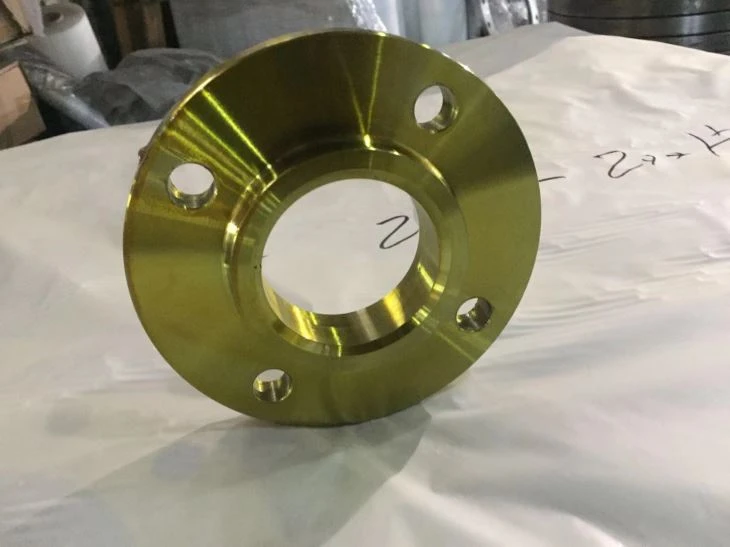
As a trusted supplier of Bsp Threaded Flanges, I often encounter questions from customers regarding the technical properties of our products. One such frequently asked question is about the elastic modulus of Bsp Threaded Flanges. In this blog post, I will delve into the concept of elastic modulus, explain its significance for Bsp Threaded Flanges, and provide some insights based on our experience in the industry.
Understanding the Elastic Modulus
The elastic modulus, also known as Young's modulus, is a fundamental mechanical property that measures the stiffness of a material. It describes the relationship between stress (force per unit area) and strain (deformation) within the elastic range of a material. In simple terms, it tells us how much a material will stretch or compress under a given load before it permanently deforms.
Mathematically, the elastic modulus (E) is defined as the ratio of stress (σ) to strain (ε):
E = σ / ε
The unit of elastic modulus is typically pascals (Pa) or gigapascals (GPa). A higher elastic modulus indicates a stiffer material, which means it will deform less under a given load compared to a material with a lower elastic modulus.
Significance of Elastic Modulus for Bsp Threaded Flanges
For Bsp Threaded Flanges, the elastic modulus plays a crucial role in determining their performance and reliability in various applications. Here are some key reasons why the elastic modulus is important:
- Load - Bearing Capacity: The elastic modulus affects the ability of the flange to withstand external loads without excessive deformation. In piping systems, flanges are subjected to internal pressure, thermal expansion, and mechanical forces. A flange with a higher elastic modulus can better resist these forces and maintain its shape, ensuring a tight seal and preventing leaks.
- Sealing Performance: A proper seal between flanges is essential to prevent fluid leakage. The elastic modulus influences how the flange deforms under bolt tightening, which in turn affects the contact pressure between the flange faces and the gasket. A flange with the appropriate elastic modulus will deform in a way that creates a uniform and sufficient contact pressure, enhancing the sealing performance.
- Vibration and Fatigue Resistance: In dynamic applications where there is vibration or cyclic loading, the elastic modulus helps the flange to resist fatigue failure. A stiffer flange is less likely to experience excessive deformation and stress concentration, reducing the risk of crack initiation and propagation over time.
Factors Affecting the Elastic Modulus of Bsp Threaded Flanges
The elastic modulus of Bsp Threaded Flanges can be influenced by several factors, including:
- Material Composition: Different materials have different elastic moduli. For example, Carbon Steel Threaded Flange typically has an elastic modulus in the range of 190 - 210 GPa, while Stainless Steel Threaded Flange has an elastic modulus around 193 GPa. The alloying elements and their proportions in the steel can also affect the elastic modulus.
- Heat Treatment: Heat treatment processes such as annealing, quenching, and tempering can alter the microstructure of the material, which in turn can affect its elastic modulus. For instance, a quenched and tempered steel may have a different elastic modulus compared to an annealed steel.
- Manufacturing Process: The manufacturing process, including forging, casting, and machining, can introduce residual stresses and affect the material's internal structure. These factors can have a minor impact on the elastic modulus of the flange.
Measuring the Elastic Modulus of Bsp Threaded Flanges
There are several methods to measure the elastic modulus of materials, and the most common one is the tensile test. In a tensile test, a specimen of the flange material is subjected to a gradually increasing tensile load until it reaches its yield point. During the test, the stress and strain are measured, and the elastic modulus is calculated from the linear portion of the stress - strain curve.
It's important to note that the elastic modulus measured from a small specimen may not exactly represent the behavior of the entire flange due to factors such as size effects and the presence of inhomogeneities. However, it provides a good indication of the material's stiffness characteristics.
Applications and the Required Elastic Modulus
The required elastic modulus of Bsp Threaded Flanges depends on the specific application. Here are some examples:
- Low - Pressure Applications: In low - pressure piping systems, such as domestic water supply or ventilation systems, the requirements for the elastic modulus are relatively less stringent. Flanges with a moderate elastic modulus can be used as the loads are not very high. For these applications, NPT Threaded Flange made of carbon steel with a standard elastic modulus can be sufficient.
- High - Pressure and High - Temperature Applications: In industries such as oil and gas, chemical processing, and power generation, where flanges are exposed to high pressures and temperatures, a higher elastic modulus is required. Stainless steel flanges are often preferred in these applications due to their better corrosion resistance and relatively high elastic modulus, which helps them withstand the harsh operating conditions.
Our Offerings as a Bsp Threaded Flange Supplier
As a supplier of Bsp Threaded Flanges, we understand the importance of the elastic modulus and its impact on the performance of our products. We offer a wide range of flanges made from different materials, including carbon steel, stainless steel, and alloy steel, each with its own characteristic elastic modulus.
Our flanges are manufactured using advanced techniques and strict quality control measures to ensure that they meet the required mechanical properties, including the elastic modulus. We also provide technical support to our customers to help them select the most suitable flange for their specific applications based on factors such as pressure, temperature, and corrosion resistance.

Conclusion
The elastic modulus is a critical property of Bsp Threaded Flanges that affects their load - bearing capacity, sealing performance, and resistance to vibration and fatigue. Understanding the concept of elastic modulus, the factors that influence it, and its significance in different applications is essential for both flange manufacturers and end - users.
If you are in need of high - quality Bsp Threaded Flanges for your project, we invite you to contact us for further discussions. Our team of experts is ready to assist you in selecting the right flanges with the appropriate elastic modulus to meet your specific requirements. We look forward to the opportunity to serve you and contribute to the success of your projects.
References
- Callister, W. D., & Rethwisch, D. G. (2010). Materials Science and Engineering: An Introduction. Wiley.
- ASME B16.5 - 2017, Pipe Flanges and Flanged Fittings.
- ISO 7005 - 1:2011, Metallic Flanges - Part 1: Steel Flanges.