

How to calculate the load - bearing capacity of steel plate flanges?
Jun 23, 2025
As a seasoned steel plate flange supplier, I've witnessed firsthand the critical importance of accurately calculating the load - bearing capacity of steel plate flanges in various industrial applications. This knowledge is not only essential for ensuring the safety and efficiency of piping systems but also for meeting the specific requirements of different projects. In this blog, I'll share with you the key factors and methods for calculating the load - bearing capacity of steel plate flanges.
Understanding the Basics of Steel Plate Flanges
Steel plate flanges are crucial components in piping systems, used to connect pipes, valves, pumps, and other equipment. They come in various types, such as weld - neck, slip - on, and threaded flanges, each designed for specific applications. For instance, the ANSI Class150 Weld Neck Steel Flange is commonly used in high - pressure and high - temperature applications due to its excellent strength and durability.
The load - bearing capacity of a steel plate flange refers to the maximum amount of load it can withstand without experiencing failure. This load can be a combination of internal pressure, external forces, and thermal stresses. Understanding the load - bearing capacity is vital to prevent flange leakage, deformation, or even catastrophic failure, which can lead to costly downtime and safety hazards.
Factors Affecting the Load - Bearing Capacity of Steel Plate Flanges
Material Properties
The material of the steel plate flange is one of the most significant factors influencing its load - bearing capacity. Different grades of steel have different mechanical properties, such as yield strength, tensile strength, and hardness. For example, a flange made of high - strength alloy steel will generally have a higher load - bearing capacity than one made of carbon steel. The chemical composition of the steel also plays a role, as elements like chromium, nickel, and molybdenum can enhance the steel's corrosion resistance and strength.
Flange Dimensions
The size and shape of the flange directly affect its load - bearing capacity. Flanges with larger diameters and thicker walls can generally withstand higher loads. The bolt circle diameter, number of bolts, and bolt size also impact the flange's ability to distribute the load evenly. A well - designed flange with an appropriate number of bolts of the right size will ensure that the load is transferred efficiently from the flange to the connected components.
Operating Conditions
The operating conditions, including internal pressure, temperature, and the type of fluid or gas flowing through the piping system, can significantly affect the load - bearing capacity of the flange. High internal pressures increase the stress on the flange, while extreme temperatures can cause thermal expansion or contraction, leading to additional stresses. Corrosive fluids or gases can also degrade the flange material over time, reducing its load - bearing capacity.
Methods for Calculating the Load - Bearing Capacity of Steel Plate Flanges
Theoretical Calculations
Theoretical calculations are based on engineering principles and equations. One of the most common methods is the use of the ASME B16.5 standard, which provides guidelines for the design and calculation of pipe flanges and flanged fittings. This standard takes into account factors such as material properties, flange dimensions, and operating conditions to determine the allowable stress and load - bearing capacity of the flange.
The basic formula for calculating the internal pressure stress in a flange is based on the hoop stress formula:
[ \sigma=\frac{P\times D}{2t} ]
where (\sigma) is the hoop stress, (P) is the internal pressure, (D) is the inside diameter of the flange, and (t) is the thickness of the flange wall.
To calculate the overall load - bearing capacity, additional factors such as the bolt pre - load, gasket seating stress, and the effect of external forces need to be considered. These calculations can be complex and require a good understanding of engineering mechanics and materials science.
Finite Element Analysis (FEA)
Finite Element Analysis (FEA) is a powerful numerical method used to simulate the behavior of the flange under different loading conditions. FEA software divides the flange into a large number of small elements and solves the equations of motion and stress for each element. This method can provide a more accurate and detailed analysis of the stress distribution and deformation of the flange, taking into account the complex geometry and boundary conditions.
FEA allows engineers to analyze the flange's performance under various scenarios, such as different internal pressures, temperatures, and external forces. By visualizing the stress distribution, engineers can identify potential areas of high stress and make design modifications to improve the load - bearing capacity of the flange.
Case Studies
Let's consider a case where a chemical processing plant is installing a new piping system. The plant requires a flange to connect a pipeline carrying a corrosive chemical at high pressure and temperature. After analyzing the operating conditions, the engineers select a NPT Thread Steel Flange made of corrosion - resistant alloy steel.
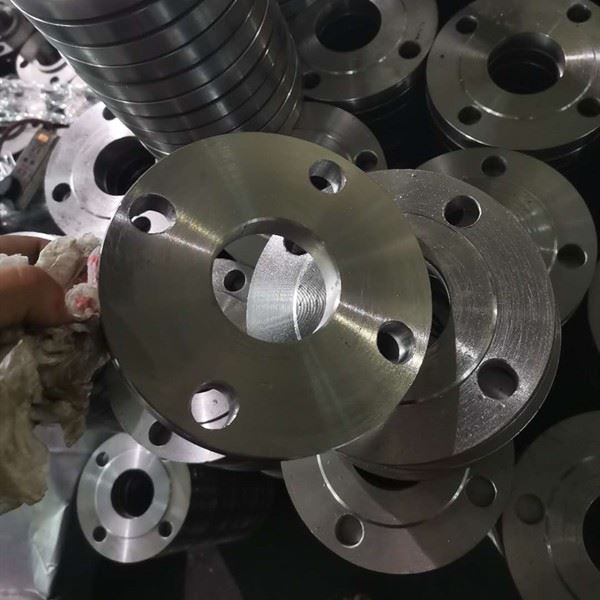

Using theoretical calculations based on the ASME B16.5 standard, the engineers determine the required flange dimensions and bolt specifications to ensure that the flange can withstand the expected internal pressure and temperature. They also perform a FEA simulation to verify the design and identify any potential areas of concern.
After installation, the flange is monitored regularly to ensure that it is performing as expected. Over time, the flange shows no signs of leakage or deformation, indicating that the load - bearing capacity calculations were accurate and the design was appropriate for the operating conditions.
Importance of Accurate Load - Bearing Capacity Calculations
Accurate load - bearing capacity calculations are essential for several reasons. Firstly, they ensure the safety of the piping system and the personnel working around it. A flange that fails due to an underestimated load - bearing capacity can cause leaks, explosions, or other accidents, putting lives and property at risk.
Secondly, accurate calculations help to optimize the design and cost of the piping system. By determining the appropriate flange size and material, unnecessary over - engineering can be avoided, reducing the cost of materials and installation. At the same time, it ensures that the flange has sufficient load - bearing capacity to meet the requirements of the project.
Conclusion
Calculating the load - bearing capacity of steel plate flanges is a complex but essential task in the design and operation of piping systems. By considering factors such as material properties, flange dimensions, and operating conditions, and using methods like theoretical calculations and FEA, engineers can ensure that the flanges are designed to withstand the expected loads.
As a steel plate flange supplier, I understand the importance of providing high - quality flanges that meet the specific requirements of each project. Whether you need a GOST33259 Steel Forged Flange for a high - pressure application or a corrosion - resistant flange for a chemical processing plant, I can offer expert advice and solutions.
If you are in the process of selecting or designing steel plate flanges for your project, I encourage you to contact me for a detailed consultation. I can help you calculate the load - bearing capacity accurately, select the right flange type and material, and ensure that your piping system operates safely and efficiently.
References
- ASME B16.5 - Pipe Flanges and Flanged Fittings
- "Piping and Pipeline Engineering: Design, Construction, Maintenance, and Integrity Management" by George A. Antaki
- "Mechanical Design of Machine Elements and Machines: A Failure - Prevention Perspective" by J. E. Shigley and C. R. Mischke