

How to calculate the flow rate through a steel reducer?
Nov 07, 2025
Calculating the flow rate through a steel reducer is a crucial aspect in various industrial applications, especially when dealing with fluid systems. As a trusted steel reducer supplier, we understand the significance of accurate flow rate calculations for the efficient operation of pipelines and related equipment. In this blog post, we will delve into the methods and factors involved in calculating the flow rate through a steel reducer.
Understanding Steel Reducers
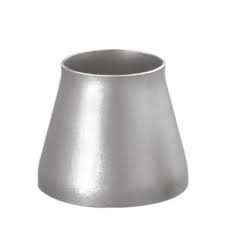
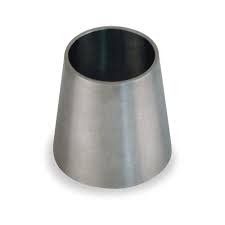
Before we dive into the flow rate calculations, let's briefly introduce steel reducers. Steel reducers are essential components in piping systems used to connect pipes of different diameters. They come in various types, such as Butt Welded Steel Reducer and Stainless Steel Concentric Reducer. These reducers play a vital role in ensuring smooth fluid flow and maintaining the integrity of the pipeline system.
Basic Principles of Flow Rate
Flow rate, often denoted as Q, refers to the volume of fluid that passes through a given cross - sectional area per unit of time. The SI unit for flow rate is cubic meters per second (m³/s), but other common units like liters per minute (L/min) or gallons per minute (GPM) are also widely used in industrial settings.
The flow rate can be calculated using the formula:
[Q = A\times v]
where (A) is the cross - sectional area of the pipe or the reducer at a particular point, and (v) is the average velocity of the fluid at that point.
Calculating Cross - Sectional Area
The cross - sectional area of a pipe or a reducer is determined by its diameter. For a circular cross - section, the area formula is:
[A=\frac{\pi d^{2}}{4}]
where (d) is the diameter of the pipe or the relevant part of the reducer.
When dealing with a steel reducer, we have two different diameters: the larger diameter ((D_1)) and the smaller diameter ((D_2)). The cross - sectional areas at the larger end ((A_1)) and the smaller end ((A_2)) can be calculated as follows:
[A_1=\frac{\pi D_1^{2}}{4}]
[A_2=\frac{\pi D_2^{2}}{4}]
Continuity Equation
The continuity equation is a fundamental principle in fluid mechanics that states that the mass flow rate of an incompressible fluid is constant throughout a pipeline. For an incompressible fluid, the density (\rho) is constant, and the mass flow rate (\dot{m}=\rho Q) is conserved. Since (\rho) is constant, the volumetric flow rate (Q) is also constant along the pipeline.
Applying the continuity equation to a steel reducer, we have:
[Q = A_1v_1=A_2v_2]
where (v_1) is the fluid velocity at the larger end of the reducer and (v_2) is the fluid velocity at the smaller end.
If we know the velocity at one end of the reducer, we can calculate the velocity at the other end using the relationship:
[v_2=\frac{A_1}{A_2}v_1=\left(\frac{D_1}{D_2}\right)^{2}v_1]
Bernoulli's Equation
Bernoulli's equation is another important tool for analyzing fluid flow through a steel reducer. It relates the pressure, velocity, and elevation of a fluid at different points in a streamline. The Bernoulli's equation for an incompressible, non - viscous fluid is:
[P_1+\frac{1}{2}\rho v_1^{2}+\rho gh_1=P_2+\frac{1}{2}\rho v_2^{2}+\rho gh_2]
where (P_1) and (P_2) are the pressures at two different points, (v_1) and (v_2) are the velocities at those points, (h_1) and (h_2) are the elevations of the points, (\rho) is the density of the fluid, and (g) is the acceleration due to gravity.
In a horizontal steel reducer ((h_1 = h_2)), the equation simplifies to:
[P_1+\frac{1}{2}\rho v_1^{2}=P_2+\frac{1}{2}\rho v_2^{2}]
By combining the continuity equation and Bernoulli's equation, we can solve for the unknown variables such as pressure and velocity, which are essential for calculating the flow rate.
Practical Steps for Flow Rate Calculation
- Determine the diameters: Measure or obtain the larger diameter ((D_1)) and the smaller diameter ((D_2)) of the steel reducer.
- Calculate the cross - sectional areas: Use the area formula (A=\frac{\pi d^{2}}{4}) to calculate (A_1) and (A_2).
- Find the fluid velocity: If the velocity at one end of the reducer is known, use the continuity equation (v_2=\left(\frac{D_1}{D_2}\right)^{2}v_1) to find the velocity at the other end. If the pressure difference (\Delta P=P_1 - P_2) is known, we can use Bernoulli's equation along with the continuity equation to solve for the velocities.
- Calculate the flow rate: Once the cross - sectional area and the velocity at a particular point are known, use the formula (Q = A\times v) to calculate the flow rate.
Factors Affecting Flow Rate Calculation
- Fluid properties: The density and viscosity of the fluid can significantly affect the flow rate. For example, a more viscous fluid will have a lower flow rate for the same pressure difference compared to a less viscous fluid.
- Reducer design: The shape and length of the steel reducer can also influence the flow rate. A well - designed reducer with a smooth transition between the two diameters will result in less energy loss and a more accurate flow rate calculation.
- Pipe roughness: The internal roughness of the pipe and the reducer can cause frictional losses, which in turn affect the flow rate.
Importance of Accurate Flow Rate Calculation
Accurate flow rate calculation is crucial for several reasons:
- System efficiency: Ensuring the correct flow rate helps in optimizing the performance of the entire fluid system, reducing energy consumption and operating costs.
- Equipment protection: Incorrect flow rates can lead to over - stressing or under - utilization of pumps, valves, and other equipment in the pipeline, potentially causing premature failure.
- Process control: In industrial processes, precise flow rate control is essential for maintaining product quality and consistency.
Our Product Range
As a leading steel reducer supplier, we offer a wide range of high - quality steel reducers, including ANSI B16.9 Carbon Steel Tee, which are designed to meet the diverse needs of our customers. Our products are manufactured using the latest technology and strict quality control measures to ensure reliable performance and long - term durability.
Contact Us for Procurement
If you are in need of steel reducers for your project and require assistance with flow rate calculation or any other technical aspects, we are here to help. Our team of experts has extensive experience in the field of fluid systems and can provide you with professional advice and solutions. Contact us today to start a procurement discussion and find the best steel reducers for your specific requirements.
References
- Munson, B. R., Young, D. F., & Okiishi, T. H. (2009). Fundamentals of Fluid Mechanics. Wiley.
- White, F. M. (2011). Fluid Mechanics. McGraw - Hill.