

What underlying conditions could be associated with SR Elbow?
Oct 22, 2025
SR Elbow, also known as Short Radius Elbow, is a crucial component in various piping systems. It is designed to change the direction of the fluid flow within a pipeline at a relatively sharp angle. As a dedicated SR Elbow supplier, I've had the opportunity to closely observe and understand the various aspects related to these components, including the underlying conditions that could be associated with them.
Material - Related Conditions
One of the primary underlying conditions associated with SR Elbows is the choice of material. The material used in manufacturing SR Elbows can significantly impact their performance and durability. Carbon steel is a popular choice for SR Elbows due to its excellent strength and affordability.

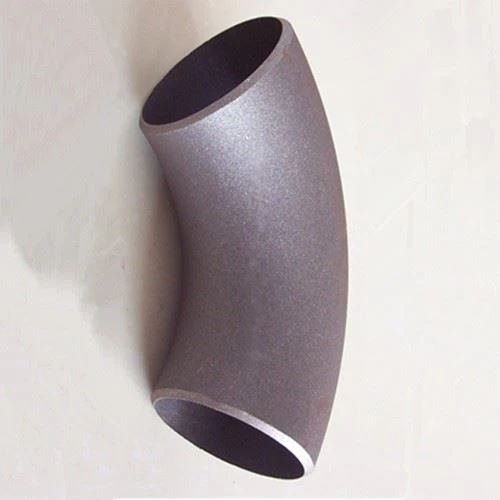
CARBON STEEL ASME B16.9 SCH40 90D ELBOWS follow specific industry standards, ensuring high - quality and reliable performance. These elbows are made from carbon steel, which has good mechanical properties. However, carbon steel is susceptible to corrosion, especially in environments with high humidity, exposure to certain chemicals, or in coastal areas where saltwater can accelerate the corrosion process.
Corrosion can lead to thinning of the elbow walls, reducing their strength and potentially causing leaks or failures in the piping system. In addition, the presence of impurities in the carbon steel can also affect the elbow's performance. For example, sulfur and phosphorus impurities can reduce the ductility and toughness of the steel, making it more prone to cracking under stress.
Another material option is stainless steel. Stainless steel SR Elbows offer better corrosion resistance compared to carbon steel. They contain chromium, which forms a passive oxide layer on the surface, protecting the metal from further oxidation and corrosion. However, stainless steel is more expensive than carbon steel, and the manufacturing process may be more complex.
Welding Conditions
Butt - welding is a common method used to install SR Elbows in piping systems. Butt Weld Elbow requires high - quality welding to ensure a strong and leak - proof connection. The welding process is a critical underlying condition that can affect the performance of SR Elbows.
Poor welding quality can lead to several issues. For instance, lack of fusion between the elbow and the pipe can create weak points in the joint. These weak points are more likely to fail under pressure, causing leaks or even pipe bursts. Incomplete penetration during welding can also reduce the strength of the joint.
Welding defects such as porosity, cracks, and slag inclusions can occur if the welding parameters are not properly controlled. Porosity is caused by the entrapment of gas bubbles during the solidification of the weld metal. These pores can act as stress concentrators, increasing the risk of crack initiation and propagation. Cracks can be either hot cracks, which occur during the solidification process, or cold cracks, which develop after the weld has cooled. Slag inclusions are non - metallic particles trapped in the weld metal, which can weaken the joint and reduce its corrosion resistance.
Flow Conditions
The flow conditions within the piping system are another important underlying factor associated with SR Elbows. The short radius of SR Elbows causes a more abrupt change in the direction of the fluid flow compared to long - radius elbows. This can result in increased turbulence and pressure drop.
High - velocity fluid flow through SR Elbows can cause erosion. Erosion is the wear and tear of the elbow walls due to the impact of the flowing fluid and any suspended particles in it. The erosion rate depends on factors such as the fluid velocity, the size and hardness of the particles, and the material of the elbow. In severe cases, erosion can lead to significant wall thinning and eventually failure of the elbow.
In addition, the presence of two - phase flow (such as a mixture of liquid and gas) can also pose challenges. The different physical properties of the two phases can cause uneven distribution of forces on the elbow walls. For example, in a gas - liquid two - phase flow, the gas phase may tend to accumulate at the outer side of the elbow, while the liquid phase may flow along the inner side. This can lead to uneven wear and corrosion of the elbow walls.
Installation and Support Conditions
Proper installation and support of SR Elbows are essential for their long - term performance. Incorrect installation, such as misalignment between the elbow and the pipe, can introduce additional stress on the elbow. Misaligned joints can cause uneven distribution of forces, increasing the risk of fatigue failure.
Insufficient support can also be a problem. SR Elbows need to be properly supported to withstand the weight of the fluid, the pressure within the pipe, and any external forces. If the elbow is not adequately supported, it may sag or deform over time. This deformation can lead to changes in the flow path, increased turbulence, and additional stress on the elbow walls.
Temperature and Pressure Conditions
The operating temperature and pressure of the piping system are crucial underlying conditions for SR Elbows. High - temperature environments can affect the material properties of the elbow. For example, at elevated temperatures, the strength and hardness of carbon steel can decrease. This can lead to creep, which is the gradual deformation of the material under constant stress over time.
High - pressure conditions also place significant demands on SR Elbows. The pressure within the pipe can cause hoop stress and longitudinal stress on the elbow walls. If the pressure exceeds the design limits of the elbow, it can lead to plastic deformation, cracking, or rupture.
Carbon Steel 90LR Seamless Elbow is designed to handle certain temperature and pressure ranges. However, it is important to carefully select the appropriate elbow based on the specific operating conditions of the piping system.
Conclusion
As a SR Elbow supplier, understanding the underlying conditions associated with SR Elbows is crucial for providing high - quality products and ensuring the reliable operation of piping systems. From material selection and welding quality to flow conditions, installation, and operating temperature and pressure, each factor plays a significant role in the performance and longevity of SR Elbows.
If you are in need of high - quality SR Elbows or have any questions regarding the selection and application of these components, please feel free to contact us for procurement and further discussions. We are committed to providing you with the best solutions for your piping system needs.
References
- ASME B16.9 - Standard for Factory - Made Wrought Buttwelding Fittings.
- Welding Handbook, American Welding Society.
- Pipe Flow Handbook, various editions covering fluid flow in piping systems.