

What materials are used to make carbon steel elbows?
Jul 22, 2025
Carbon steel elbows are essential components in various piping systems, known for their durability, strength, and cost - effectiveness. As a carbon steel elbow supplier, I am often asked about the materials used to make these crucial parts. In this blog, I will delve into the materials that go into the production of carbon steel elbows, their properties, and how they contribute to the overall performance of the elbows.
Basic Composition of Carbon Steel
Carbon steel is primarily an alloy of iron and carbon, with the carbon content typically ranging from 0.05% to 2.1% by weight. This relatively simple composition gives carbon steel its characteristic strength and ductility. Other elements may also be present in small amounts, including manganese, silicon, sulfur, and phosphorus.
Iron
Iron is the base metal in carbon steel. It forms the matrix within which the other elements are dispersed. Iron has the ability to exist in different crystal structures, depending on its temperature and the presence of other elements. These different structures significantly influence the properties of the steel. For example, at room temperature, iron can exist in a body - centered cubic (BCC) structure known as ferrite, which is relatively soft and ductile. At higher temperatures, it can transform into a face - centered cubic (FCC) structure called austenite, which has different mechanical properties.
Carbon
Carbon is the most important alloying element in carbon steel. It has a profound impact on the strength and hardness of the steel. As the carbon content increases, the strength and hardness of the steel also increase, while its ductility and weldability tend to decrease. In carbon steel elbows, the carbon content is carefully controlled to balance these properties. For general - purpose applications, a carbon content of around 0.1% - 0.3% is common. This range provides a good combination of strength, ductility, and weldability, making the elbows suitable for a wide variety of piping systems.
Manganese
Manganese is added to carbon steel to improve its strength and toughness. It also helps to remove sulfur from the steel, which can cause brittleness. Manganese combines with sulfur to form manganese sulfide (MnS), which is less harmful to the steel's properties than iron sulfide. In carbon steel elbows, manganese content is typically in the range of 0.3% - 1.5%. This addition enhances the elbow's resistance to cracking and deformation under stress.
Silicon
Silicon is another common alloying element in carbon steel. It acts as a deoxidizer during the steel - making process, removing oxygen from the molten steel and preventing the formation of oxides that could weaken the steel. Silicon also improves the strength and hardness of the steel. In carbon steel elbows, silicon content is usually kept between 0.1% - 0.5%.
Sulfur and Phosphorus
Sulfur and phosphorus are considered impurities in carbon steel. They can have a negative impact on the steel's ductility, weldability, and toughness. High sulfur content can lead to hot shortness, which means the steel becomes brittle at high temperatures. Phosphorus can cause cold shortness, making the steel brittle at low temperatures. Therefore, in the production of carbon steel elbows, the sulfur and phosphorus content is strictly controlled, usually limited to less than 0.05% each.
Types of Carbon Steel Used for Elbows
There are several types of carbon steel that are commonly used to make elbows, each with its own unique properties and applications.
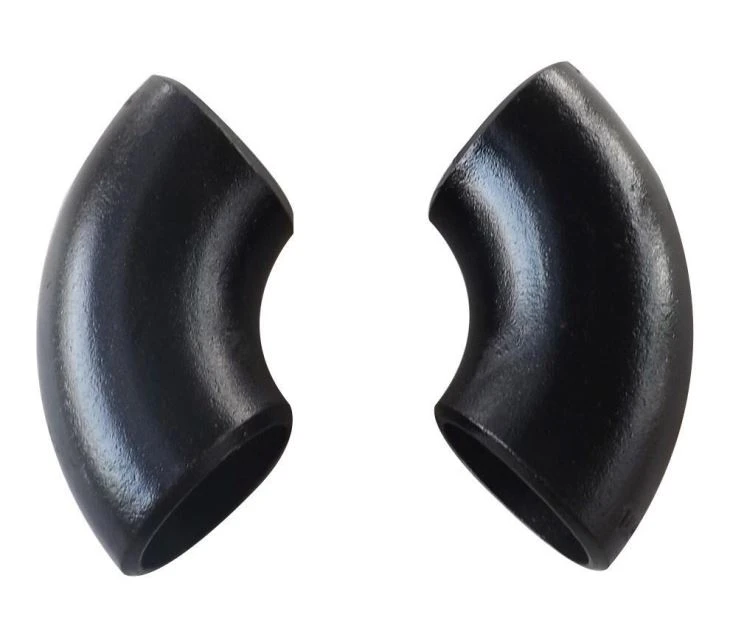

Low - Carbon Steel
Low - carbon steel, also known as mild steel, has a carbon content of less than 0.3%. It is the most widely used type of carbon steel for making elbows due to its excellent ductility, weldability, and formability. Low - carbon steel elbows are relatively easy to manufacture and can be bent and shaped without significant cracking. They are suitable for applications where high strength is not the primary requirement, such as in water supply systems, ventilation systems, and some low - pressure piping applications. For example, 90 Degree Lr Elbow made from low - carbon steel is often used in general - purpose piping systems where smooth flow and easy installation are important.
Medium - Carbon Steel
Medium - carbon steel has a carbon content ranging from 0.3% to 0.6%. It offers higher strength and hardness compared to low - carbon steel. Medium - carbon steel elbows are commonly used in applications where greater strength is required, such as in industrial piping systems that carry high - pressure fluids or gases. However, they are less ductile and weldable than low - carbon steel, so special welding techniques may be required during installation. Carbon Steel LR Elbow SCH40 DN50 made from medium - carbon steel can withstand higher pressure and stress, making it suitable for more demanding industrial applications.
High - Carbon Steel
High - carbon steel has a carbon content of more than 0.6%. It is extremely hard and strong but has poor ductility and weldability. High - carbon steel elbows are used in specialized applications where high wear resistance is required, such as in mining and abrasive - laden fluid transportation systems. However, due to their brittleness, they need to be handled and installed with care.
Manufacturing Process and Material Impact
The manufacturing process of carbon steel elbows also affects the performance of the final product. The most common manufacturing methods include hot - bending and cold - bending.
Hot - Bending
In the hot - bending process, the carbon steel pipe is heated to a high temperature (usually above 800°C) and then bent into the desired elbow shape. At high temperatures, the steel becomes more malleable, allowing for easier bending without cracking. The hot - bending process can also improve the grain structure of the steel, enhancing its mechanical properties. However, the heating process can cause some changes in the material's composition, such as decarburization (loss of carbon from the surface). To prevent this, special heat - treatment processes may be applied after bending.
Cold - Bending
Cold - bending is performed at room temperature. It is suitable for low - carbon steel elbows, as low - carbon steel has good ductility at room temperature. Cold - bending is a more cost - effective method compared to hot - bending, but it may introduce internal stresses in the elbow. These internal stresses can be relieved through a stress - relieving heat treatment process.
Quality Control of Materials
As a carbon steel elbow supplier, quality control of the materials is of utmost importance. We source our raw materials from reputable steel mills that adhere to strict quality standards. Before production, the raw materials are thoroughly tested to ensure they meet the required chemical composition and mechanical properties.
Chemical analysis is conducted to determine the exact content of each alloying element in the steel. This is usually done using methods such as spectroscopy. Mechanical tests, such as tensile tests, hardness tests, and impact tests, are also performed to evaluate the strength, hardness, and toughness of the steel. Non - destructive testing methods, such as ultrasonic testing and magnetic particle testing, are used to detect any internal defects in the elbows.
Applications and Advantages of Carbon Steel Elbows
Carbon steel elbows are widely used in various industries, including oil and gas, chemical, power generation, and water treatment. Their advantages include:
- Strength and Durability: Carbon steel elbows can withstand high pressure and temperature, making them suitable for demanding industrial applications.
- Cost - Effectiveness: Compared to other materials such as stainless steel or alloy steel, carbon steel is relatively inexpensive, which reduces the overall cost of the piping system.
- Weldability: Most carbon steel elbows can be easily welded to other pipes and fittings, simplifying the installation process.
If you are looking for high - quality carbon steel elbows for your piping system, we are here to provide you with the best products and services. Our carbon steel elbows are made from carefully selected materials and manufactured using advanced processes to ensure superior performance. Whether you need 90 Degree Lr Elbow, Carbon Steel LR Elbow SCH40 DN50, or 45 Degree Pipe Elbow Manufacturer products, we can meet your requirements. Contact us today to discuss your specific needs and start a successful procurement negotiation.
References
- ASME B16.9 - Factory - Made Wrought Steel Buttwelding Fittings
- ASTM A234 - Standard Specification for Piping Fittings of Wrought Carbon Steel and Alloy Steel for Moderate and High - Temperature Service
- API 5L - Specification for Line Pipe