

What is the weight of A105 Steel Elbow?
Jun 25, 2025
Hey there! As a supplier of A105 Steel Elbows, I often get asked about the weight of these nifty components. So, I thought I'd dive deep into this topic and share everything I've learned over the years.
First off, let's talk a bit about what A105 Steel Elbows are. They're made from ASTM A105 carbon steel, which is a popular choice in the industry due to its excellent mechanical properties and good weldability. These elbows are used in a wide range of applications, from plumbing systems to oil and gas pipelines.
Now, the weight of an A105 Steel Elbow isn't a one - size - fits - all deal. It depends on several factors. The main ones are the size (diameter), wall thickness, and the type of elbow.
Size (Diameter)
The diameter of the elbow plays a huge role in determining its weight. Larger diameter elbows are generally heavier because they require more material to manufacture. For example, a 2 - inch A105 Steel Elbow will weigh significantly less than a 12 - inch one. It's pretty straightforward; the bigger the opening, the more steel is needed to form the elbow.
Wall Thickness
Wall thickness is another crucial factor. Thicker walls mean more steel, and thus, more weight. Elbows with thicker walls are often used in high - pressure applications where strength is of the essence. If you're working in an environment where there's a lot of pressure, you'll probably opt for an elbow with a thicker wall, but you need to be aware that it'll be heavier.
Type of Elbow
There are different types of A105 Steel Elbows, such as 45 - degree and 90 - degree elbows. The angle of the elbow affects the amount of material used. A 90 - degree elbow usually requires more material than a 45 - degree one, so it'll be heavier. Also, there are long - radius (LR) and short - radius (SR) elbows. SR Elbow typically have a tighter bend, and they may weigh less compared to long - radius elbows, which have a more gradual curve and use more material.

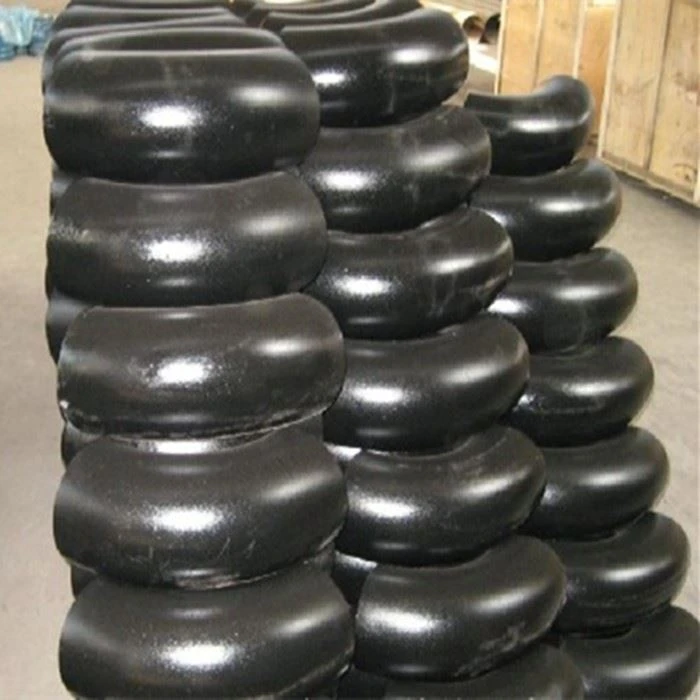
To give you a better idea of how these factors interact, let's look at some general weight ranges. For a small 1 - inch A105 Steel Elbow with a standard wall thickness and a 90 - degree angle, the weight might be around 0.5 to 1 kilogram. On the other hand, a large 24 - inch elbow with a thick wall could weigh several hundred kilograms.
Calculating the exact weight of an A105 Steel Elbow can be a bit tricky. You can use some standard formulas, but these are usually based on ideal conditions. In reality, factors like manufacturing tolerances can also affect the final weight.
If you're looking for different standards of steel elbows, there are also ANSI Steel Elbow and DIN Carbon Steel Seamless Elbow. These follow different specifications and may have different weight characteristics based on their design and manufacturing requirements.
When you're planning a project, it's essential to consider the weight of the A105 Steel Elbows. If you're installing them in a structure, the weight can impact the overall load - bearing capacity. You need to make sure that the supporting structures can handle the weight of the elbows along with the fluid or gas that will flow through them.
Also, transportation is another aspect. Heavier elbows can be more expensive to transport, both in terms of fuel costs and the need for more robust handling equipment. So, it's a good idea to have a clear understanding of the weight before you make your purchase.
As a supplier, I've helped many customers choose the right A105 Steel Elbows based on their weight requirements. Whether you're working on a small plumbing project or a large - scale industrial installation, we've got a wide range of options to meet your needs.
If you're interested in purchasing A105 Steel Elbows, I'd love to have a chat with you. I can provide you with detailed information about the weight, dimensions, and prices of our products. Don't hesitate to reach out if you have any questions or if you're ready to start your procurement process. We're here to make sure you get the best - suited A105 Steel Elbows for your project.
References
- ASTM A105 Standard Specification for Carbon Steel Forgings for Piping Applications
- Industry handbooks on pipe fittings and their properties