

What is the marking on a butt weld elbow?
Oct 29, 2025
Hey there! As a supplier of butt weld elbows, I often get asked about the markings on these essential pipe fittings. So, let's dive right in and break down what those markings actually mean.
First off, why are markings so important on butt weld elbows? Well, they're like a secret code that tells you everything you need to know about the elbow at a glance. Whether you're an engineer, a contractor, or just someone curious about these things, these markings provide crucial information about the elbow's specifications, materials, and standards.
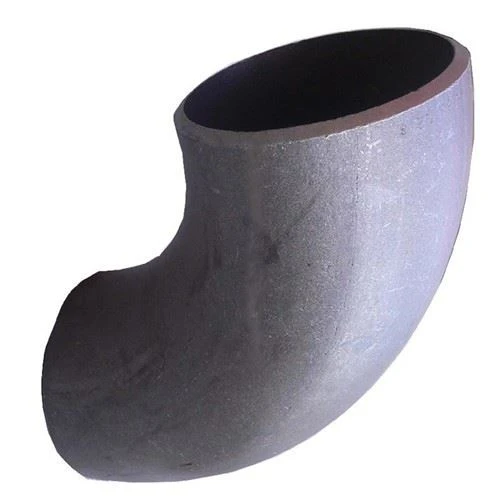

One of the most common markings you'll see on a butt weld elbow is the size. This is usually indicated by a series of numbers that represent the nominal pipe size (NPS). For example, if you see a marking that says "4", it means the elbow is designed to fit a 4-inch pipe. Easy, right? But it's not just about the diameter. The wall thickness is also an important factor, and that's often denoted by a schedule number, like SCH40 or SCH80. A ANSI SCH40 Steel Elbow, for instance, has a specific wall thickness based on the ANSI standard.
The angle of the elbow is another key piece of information. Most butt weld elbows come in 45-degree or 90-degree angles, but you can also find 180-degree elbows for special applications. The angle is usually marked clearly on the elbow itself, so you know exactly how it's going to fit into your piping system.
Now, let's talk about the material. Different materials are used for butt weld elbows depending on the application. Carbon steel is a popular choice because it's strong, durable, and relatively inexpensive. You might see a marking like "CS" for carbon steel. If it's a DIN Carbon Steel Seamless Elbow, the "DIN" indicates that it meets the German standards for quality and dimensions. Seamless elbows are great because they have a smooth interior surface, which reduces the risk of corrosion and pressure drop.
Stainless steel is another common material, especially in applications where corrosion resistance is crucial. You'll often see markings like "SS304" or "SS316", which refer to the specific grade of stainless steel. These grades have different chemical compositions that make them suitable for different environments. For example, SS316 is more resistant to corrosion in marine environments than SS304.
In addition to the size, angle, and material, there are also markings that indicate the manufacturing standard. Standards like ASME, ASTM, and API ensure that the elbow meets certain quality and safety requirements. These markings give you confidence that the elbow has been tested and meets industry standards.
Some elbows may also have markings for the manufacturer's name or logo, the heat number, and the batch number. The heat number is important because it allows you to trace the origin of the material and its properties. If there's ever an issue with the elbow, you can use the heat number to find out more about the specific batch it came from.
Now, let's take a closer look at a Carbon Steel 90LR Seamless Elbow. The "90" indicates the angle of the elbow, while the "LR" stands for long radius. A long radius elbow has a larger radius of curvature compared to a short radius elbow. This can be beneficial in applications where there's a need to reduce pressure drop or where the flow of fluid needs to be smoother.
So, how do you read these markings? It might seem a bit confusing at first, but once you get the hang of it, it's actually pretty straightforward. Start by looking for the size and schedule number. Then, check the angle and the material marking. Finally, look for the manufacturing standard and any other additional markings.
If you're in the market for butt weld elbows, it's important to pay attention to these markings. They'll help you choose the right elbow for your specific application. And as a supplier, I can tell you that we take great care in ensuring that all our elbows are properly marked and meet the highest quality standards.
Whether you're working on a small plumbing project or a large industrial installation, having the right butt weld elbow is essential. The markings on these elbows are your guide to making the right choice. So, next time you're looking at a butt weld elbow, take a closer look at those markings and see what they can tell you.
If you have any questions about butt weld elbows or need help choosing the right one for your project, don't hesitate to reach out. We're here to assist you every step of the way. Whether you need a DIN Carbon Steel Seamless Elbow, an ANSI SCH40 Steel Elbow, or a Carbon Steel 90LR Seamless Elbow, we've got you covered. Let's start a conversation and find the perfect solution for your piping needs.
References
- ASME B16.9: Factory-Made Wrought Steel Buttwelding Fittings
- ASTM A234: Standard Specification for Piping Fittings of Wrought Carbon Steel and Alloy Steel for Moderate and High-Temperature Service
- API 5L: Specification for Line Pipe