

What is the impact resistance of steel pipe tees?
Jul 31, 2025
What is the impact resistance of steel pipe tees?
As a seasoned supplier of steel pipe tees, I've witnessed firsthand the critical role these components play in various industries. Steel pipe tees are essential for redirecting the flow of fluids and gases in piping systems, and their ability to withstand impact is of utmost importance. In this blog, I'll delve into the factors that influence the impact resistance of steel pipe tees, the significance of this property, and how we ensure the high - quality impact resistance of our products.
Factors Affecting the Impact Resistance of Steel Pipe Tees
Material Composition
The type of steel used in manufacturing pipe tees is a fundamental factor in determining their impact resistance. Different steel grades have varying chemical compositions, which directly affect their mechanical properties. For example, carbon steel is a commonly used material for pipe tees. Carbon steel contains carbon as the main alloying element, and its impact resistance can be adjusted by controlling the carbon content. Generally, a lower carbon content makes the steel more ductile, which is beneficial for absorbing impact energy.
Alloy steels, on the other hand, contain additional alloying elements such as chromium, nickel, and molybdenum. These elements can enhance the strength, hardness, and toughness of the steel, thereby improving its impact resistance. For instance, a steel pipe tee made of high - strength low - alloy (HSLA) steel can withstand higher impact forces compared to a regular carbon steel tee.
Heat Treatment
Heat treatment is a crucial process that can significantly alter the microstructure and mechanical properties of steel pipe tees. Processes like quenching and tempering can improve the hardness and toughness of the steel. Quenching involves rapidly cooling the heated steel, which forms a hard martensitic structure. However, martensite is often brittle, so tempering is carried out afterwards. Tempering at a specific temperature reduces the internal stress and brittleness of the quenched steel, while maintaining a good balance between strength and toughness.
Normalizing is another heat treatment method that is used to refine the grain structure of the steel. A finer grain structure generally leads to better impact resistance because it provides more barriers to crack propagation.

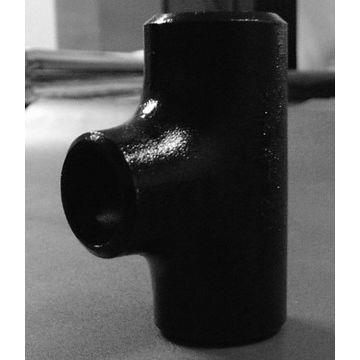
Manufacturing Process
The manufacturing process of steel pipe tees also has a profound impact on their impact resistance. For example, seamless pipe tees are typically stronger and have better impact resistance than welded tees. Seamless tees are made from solid billets, which are pierced and formed into the tee shape. This process results in a more uniform structure without the potential weaknesses associated with welds.
In the case of welded tees, the quality of the weld is crucial. A well - welded tee with proper fusion and low porosity can have good impact resistance. However, if the welding process is not carried out correctly, it can introduce defects such as cracks, inclusions, and lack of fusion, which can significantly reduce the impact resistance of the tee.
Significance of Impact Resistance in Steel Pipe Tees
Safety in Piping Systems
In industrial piping systems, steel pipe tees are often subjected to various types of impacts. For example, in a mining operation, the pipes may be hit by rocks or other heavy objects during the transportation of ore. In a chemical plant, the tees may experience sudden pressure surges or impacts from internal fluid flow. If the pipe tees do not have sufficient impact resistance, they can crack or break, leading to leaks of hazardous fluids or gases. This can pose a serious threat to the safety of workers and the environment.
Long - term Reliability
A high - impact - resistant steel pipe tee can ensure the long - term reliability of the piping system. It can withstand the wear and tear caused by normal operation and occasional impacts over an extended period. This reduces the need for frequent replacements and maintenance, which can save time and money for the end - users.
Compliance with Standards
Many industries have strict standards and regulations regarding the impact resistance of steel pipe tees. For example, the ANSI B16.9 standard sets requirements for the dimensions, tolerances, and mechanical properties of pipe fittings, including tees. By ensuring that our steel pipe tees meet these standards, we can provide our customers with products that are reliable and compliant with industry requirements.
Our Commitment to High - Quality Impact Resistance
As a supplier of steel pipe tees, we are committed to providing products with excellent impact resistance. We source high - quality steel materials from reputable suppliers and conduct thorough inspections to ensure their chemical composition and mechanical properties meet our standards.
Our manufacturing processes are carefully controlled to ensure the highest quality. For seamless tees, we use advanced piercing and forming techniques to produce tees with a uniform structure. For welded tees, our experienced welders follow strict welding procedures to ensure the quality of the welds.
We also perform extensive testing on our steel pipe tees to verify their impact resistance. We use methods such as the Charpy V - notch test, which measures the energy absorbed by the tee when it is subjected to a sudden impact. This test allows us to accurately assess the toughness and impact resistance of our products and make any necessary adjustments to our manufacturing processes.
Our Product Range
We offer a wide range of steel pipe tees to meet the diverse needs of our customers. Our Carbon Steel Reducing Tee is designed for applications where the pipe diameter needs to be reduced. It is made of high - quality carbon steel and has excellent impact resistance.
Our Steel Equal Tee is suitable for applications where the branch and the run have the same diameter. It is available in different sizes and can withstand high - impact forces.
We also provide ANSI B16.9 Carbon Steel Tee Reducer, which complies with the ANSI B16.9 standard. This tee reducer is ideal for industries that require strict compliance with industry standards.
Conclusion
The impact resistance of steel pipe tees is a critical property that affects the safety, reliability, and compliance of piping systems. As a supplier, we understand the importance of this property and are committed to providing high - quality products with excellent impact resistance. Our wide range of steel pipe tees, including carbon steel reducing tees, steel equal tees, and ANSI B16.9 carbon steel tee reducers, are designed to meet the diverse needs of our customers.
If you are in the market for high - quality steel pipe tees with excellent impact resistance, we invite you to contact us for a detailed discussion about your requirements. We look forward to partnering with you to provide the best solutions for your piping system needs.
References
- ASME B31.3 Process Piping Code
- ANSI B16.9 Standard for Factory - Made Wrought Steel Buttwelding Fittings
- "Metallurgy and Mechanics of Welding" by John F. Lancaster