

What are the markings on Ansi Blind Flange?
Jun 30, 2025
Hey there! I'm a supplier of Ansi Blind Flanges, and today I wanna chat about the markings on these flanges. You might be wondering why markings are even important. Well, they're like a secret code that tells you a whole lot about the flange at a glance.
Let's start with the basics. An Ansi Blind Flange is a type of flange that's used to close the end of a pipe or a valve. It doesn't have a center hole, which makes it perfect for situations where you need to block off a pipeline. The markings on these flanges are crucial for identification, safety, and ensuring that the flange is used correctly.
One of the most common markings you'll see on an Ansi Blind Flange is the ANSI standard number. This number tells you which ANSI standard the flange conforms to. For example, if you see "ANSI B16.5", it means the flange meets the requirements of the ANSI B16.5 standard, which is widely used for pipe flanges and flanged fittings. This standard specifies things like the dimensions, pressure ratings, and material requirements for the flange.
Another important marking is the pressure class. This indicates the maximum pressure that the flange can safely handle. Pressure classes are usually denoted by numbers like 150, 300, 600, etc. For instance, a flange marked with "Class 300" can withstand a higher pressure than a flange marked with "Class 150". You can check out more about Asa Class 150 Standard Flange and Class 300 Slip On Flange on our website.
The size of the flange is also clearly marked. This is usually given in inches and refers to the nominal pipe size (NPS) that the flange is designed to fit. So, if you see a marking like "2 inch", it means the flange is meant to be used with a 2-inch pipe. You can learn more about 2 Inch B16.36 Flange on our site.
The material of the flange is another key marking. It tells you what the flange is made of, which is important because different materials have different properties and are suitable for different applications. Common materials for Ansi Blind Flanges include carbon steel, stainless steel, and alloy steel. For example, a flange marked "CS" is made of carbon steel, while one marked "SS" is made of stainless steel.
Some flanges may also have markings indicating the face type. The face type refers to the shape of the sealing surface of the flange. Common face types include flat face (FF), raised face (RF), and ring joint face (RTJ). Each face type has its own advantages and is used in different situations. For example, a raised face flange provides a better seal than a flat face flange in high-pressure applications.
In addition to these basic markings, there may be other markings on the flange depending on its specific features or requirements. For example, some flanges may have markings indicating the heat treatment process, the manufacturer's logo, or a serial number for traceability.

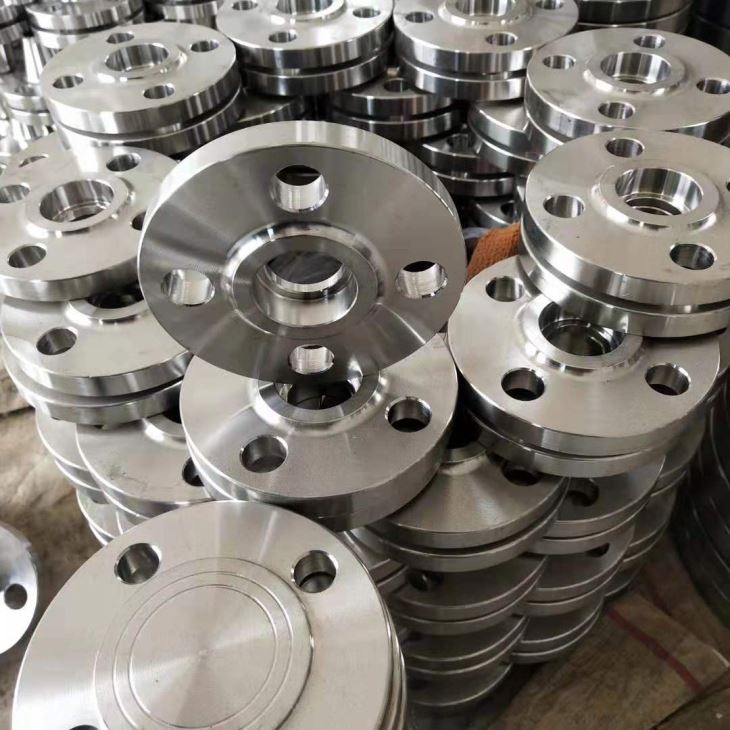
Now, you might be thinking, "Why do I need to know all this about the markings?" Well, it's all about making sure you get the right flange for your application. Using the wrong flange can lead to all sorts of problems, like leaks, pressure failures, and even safety hazards. By understanding the markings, you can choose the flange that meets your specific needs in terms of size, pressure rating, material, and face type.
As a supplier of Ansi Blind Flanges, I can tell you that we take great care in ensuring that all our flanges are properly marked. We use high-quality materials and state-of-the-art manufacturing processes to produce flanges that meet or exceed the industry standards. Our team of experts is always available to answer any questions you may have about our products and help you choose the right flange for your project.
If you're in the market for Ansi Blind Flanges or any other type of flanges, I encourage you to get in touch with us. We offer a wide range of flanges at competitive prices, and we're committed to providing excellent customer service. Whether you're a small business or a large industrial company, we can help you find the perfect flange for your needs.
So, don't hesitate to reach out to us if you have any questions or if you're ready to place an order. We're here to make your flange buying experience as easy and hassle-free as possible.
References
- ANSI B16.5 Standard for Pipe Flanges and Flanged Fittings
- Industry guides on flange manufacturing and usage