

What are the bolts and nuts suitable for Ansi Blind Flange?
Jun 02, 2025
Hey there! I'm an ANSI Blind Flange supplier, and today I wanna chat about the bolts and nuts that are suitable for ANSI Blind Flanges.
First off, let's understand what ANSI Blind Flanges are. These are flat circular discs used to seal the end of a pipe, valve, or other equipment in a piping system. They're crucial for preventing the flow of fluid or gas and ensuring the safety and integrity of the system.
Now, onto the bolts and nuts. The choice of bolts and nuts for ANSI Blind Flanges depends on several factors, such as the pressure rating, temperature, and the type of fluid or gas being handled in the system.
Pressure Rating
ANSI Blind Flanges come in different pressure classes, like Class 150, Class 300, Class 600, etc. Each class has specific requirements for the bolts and nuts. For instance, a higher pressure class will need stronger and more robust bolts and nuts to withstand the greater forces.
If you're dealing with a Class 300 Lap Joint Flange, you'll want bolts and nuts that can handle the pressure associated with this class. Usually, for Class 300 flanges, we're looking at bolts made of materials like ASTM A193 Grade B7. These bolts are made of alloy steel and have excellent strength and corrosion resistance. The corresponding nuts would typically be ASTM A194 Grade 2H, which are designed to work well with the B7 bolts.
Temperature
Temperature also plays a big role. In high - temperature applications, the material of the bolts and nuts needs to be able to maintain its strength and integrity. For example, in a system where the temperature can reach several hundred degrees Celsius, regular carbon steel bolts might not be suitable. We'd need to use bolts made of materials like Inconel or stainless steel.
Let's say you have an Ansi B16 1 Class 125 Flanges in a system that operates at relatively low temperatures. In this case, ASTM A307 Grade A bolts can be a good choice. These are carbon steel bolts that are cost - effective and suitable for lower - pressure and lower - temperature applications. The nuts for these bolts would usually be ASTM A563 Grade A.
Fluid or Gas Type
The type of fluid or gas in the system can also affect the choice of bolts and nuts. If the fluid is corrosive, such as a chemical solution or saltwater, we need to use corrosion - resistant materials. Stainless steel bolts and nuts are a popular choice in such situations.
For an ANSI Slip On Class300 Steel Flange in a system handling a corrosive fluid, we might opt for ASTM A193 Grade B8M bolts. These are made of stainless steel and offer good resistance to corrosion. The corresponding nuts would be ASTM A194 Grade 8M.
Bolt Size and Thread
The size of the bolts is determined by the flange size. Larger flanges will require larger bolts. The thread of the bolts also needs to match the flange. ANSI flanges typically use unified coarse (UNC) or unified fine (UNF) threads.
For example, a small - sized ANSI Blind Flange might use 1/2 - inch diameter bolts with a UNC thread, while a larger flange could use 2 - inch diameter bolts. It's important to get the right size and thread to ensure a proper fit and a tight seal.
Installation Considerations
When installing the bolts and nuts on ANSI Blind Flanges, it's crucial to follow the correct torque values. Over - tightening can damage the flange or the bolts, while under - tightening can lead to leaks. There are torque charts available that provide the recommended torque values based on the bolt size, material, and flange class.
We also need to make sure the bolts are evenly tightened. A good practice is to use a torque wrench and tighten the bolts in a star pattern. This helps to distribute the load evenly across the flange and ensures a proper seal.
Quality Assurance
As a supplier, I always make sure that the bolts and nuts I provide meet the relevant industry standards. We test the materials for their mechanical properties, such as strength and hardness. We also check for any surface defects or impurities.

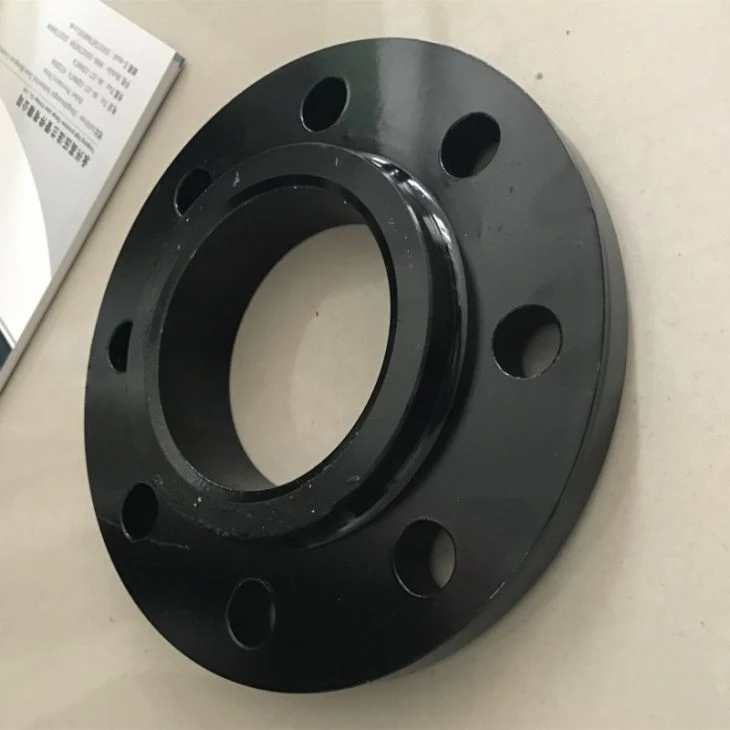
We source our materials from reliable suppliers and have a strict quality control process in place. This ensures that our customers get high - quality products that they can trust.
Cost - Effectiveness
While quality is important, cost - effectiveness is also a consideration. We offer a range of options so that our customers can choose the bolts and nuts that best fit their budget without compromising on quality. For example, if the application allows, we might recommend more cost - effective carbon steel bolts instead of more expensive stainless steel ones.
In conclusion, choosing the right bolts and nuts for ANSI Blind Flanges is a complex process that involves considering factors like pressure rating, temperature, fluid or gas type, bolt size, and installation requirements. As a supplier, I'm here to help you make the best choice for your specific application.
If you're in the market for ANSI Blind Flanges and the right bolts and nuts to go with them, don't hesitate to reach out. We can have a detailed discussion about your needs and find the perfect solution for your piping system. Let's work together to ensure the safety and efficiency of your operations.
References
- ASME B16.5 Standard for Pipe Flanges and Flanged Fittings
- ASTM Standards for Bolts and Nuts (e.g., ASTM A193, ASTM A194, etc.)