

How to calculate the bolt torque for a steel plate flange?
Aug 07, 2025
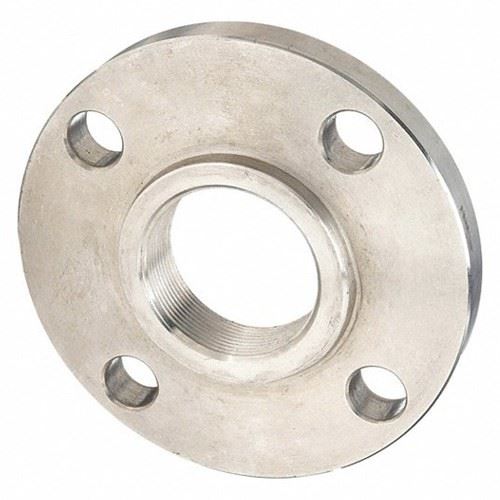
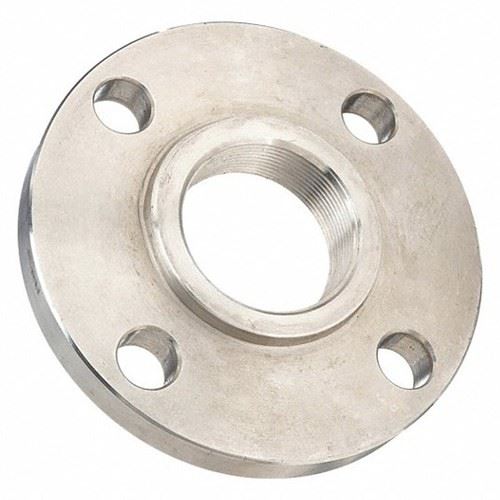
Hey there! As a supplier of steel plate flanges, I often get asked about how to calculate the bolt torque for these flanges. It's a crucial aspect when it comes to ensuring the proper installation and functionality of steel plate flanges. In this blog, I'll walk you through the process step by step.
First off, let's understand why calculating bolt torque is so important. When you're dealing with steel plate flanges, the right bolt torque ensures a tight and leak - free connection. If the torque is too low, the flange joint might leak, which can be a big problem, especially in applications where the fluid or gas being transported is hazardous or valuable. On the other hand, if the torque is too high, it can damage the bolts, the flanges, or even cause the whole system to fail.
Factors Affecting Bolt Torque
There are several factors that you need to consider when calculating the bolt torque for a steel plate flange.
Bolt Material and Size
The material of the bolt plays a huge role. Different materials have different strength properties. For example, high - strength alloy steel bolts can withstand more torque compared to regular carbon steel bolts. The size of the bolt also matters. Larger diameter bolts generally require more torque.
Flange Material and Type
The material of the flange, whether it's stainless steel, carbon steel, or some other alloy, affects the torque calculation. Also, different types of flanges, like PN16 Stainless Steel Flanges, Carbon Steel Welding Neck Flange, or ANSI Class300 Slip On Forged Flange, have different requirements. A welding neck flange might need a different torque value compared to a slip - on flange because of its design and how it distributes stress.
Gasket Material and Condition
The gasket is what seals the flange joint. The material of the gasket, such as rubber, graphite, or PTFE, and its condition (new or used) impact the torque. A new gasket might require more torque to compress properly and create a good seal.
Operating Conditions
The pressure and temperature of the system where the flange is installed are important. Higher pressure systems usually need more torque to keep the joint sealed. Similarly, extreme temperatures can affect the materials' properties, and you might need to adjust the torque accordingly.
The Basic Torque Calculation Formula
The most common formula for calculating bolt torque is:
[T = K \times D \times F]
Where:
- (T) is the torque (in N·m or ft - lb)
- (K) is the torque coefficient. This value depends on factors like the surface finish of the bolt and nut, lubrication, and the type of material. For unlubricated bolts, (K) can range from 0.18 to 0.22. For lubricated bolts, (K) can be around 0.10 to 0.15.
- (D) is the nominal diameter of the bolt (in mm or inches)
- (F) is the pre - load force on the bolt (in N or lb)
Step - by - Step Calculation Process
Step 1: Determine the Pre - load Force ((F))
The pre - load force is the force that you want to apply to the bolt to keep the flange joint tight. You can calculate it based on the pressure in the system. For a simple case, if you know the internal pressure ((P)) of the system and the area ((A)) over which the pressure acts, the total force ((F_{total})) on the flange is (F_{total}=P\times A). Then, you divide this total force by the number of bolts ((n)) to get the pre - load force per bolt ((F)).
[F=\frac{P\times A}{n}]
For example, if the internal pressure (P = 10) MPa, the area (A = 0.1\ m^{2}), and there are 8 bolts, first convert the pressure to (N/m^{2}) ((1\ MPa=1\times10^{6}\ N/m^{2})), so (P = 10\times10^{6}\ N/m^{2}). Then (F_{total}=P\times A=10\times10^{6}\times0.1 = 1\times10^{6}\ N). And the pre - load force per bolt (F=\frac{1\times10^{6}}{8}=125000\ N)
Step 2: Select the Torque Coefficient ((K))
As mentioned earlier, the torque coefficient depends on the lubrication and surface finish. If you're using a lubricated bolt, you can assume (K = 0.12). If it's unlubricated, (K = 0.2)
Step 3: Measure the Bolt Diameter ((D))
Use a caliper to measure the nominal diameter of the bolt. Make sure to use the correct units (mm or inches) depending on your calculation requirements.
Step 4: Calculate the Torque ((T))
Now, just plug the values of (K), (D), and (F) into the torque formula (T = K\times D\times F).
Let's say the bolt diameter (D = 20) mm ((0.02) m), (K = 0.12), and (F = 125000) N. Then the torque (T=K\times D\times F=0.12\times0.02\times125000 = 300) N·m
Using Torque Tables
If you don't want to do the calculations from scratch every time, you can use torque tables. Many manufacturers provide torque tables for their bolts and flanges. These tables are based on extensive testing and take into account different factors like bolt size, material, and operating conditions. You just need to find the appropriate table for your specific situation and look up the recommended torque value.
Torque Application
Once you've calculated the torque, you need to apply it correctly. Use a calibrated torque wrench to ensure accurate torque application. Start by tightening the bolts in a cross - pattern to ensure even loading on the flange. This helps to prevent the flange from warping and ensures a proper seal.
Conclusion
Calculating the bolt torque for a steel plate flange is a critical process that requires careful consideration of multiple factors. By understanding the basic formula, following the step - by - step process, and using the right tools, you can ensure a reliable and leak - free flange joint.
If you're in the market for high - quality steel plate flanges or have any questions about torque calculations or flange installation, feel free to reach out. We're here to help you make the right choices for your projects.
References
- Machinery's Handbook
- ASME B16.5 Standard for Pipe Flanges and Flanged Fittings
- Manufacturer's documentation for bolts and flanges