

Can steel flanges be used in corrosive chemical environments?
Jan 07, 2026
Can steel flanges be used in corrosive chemical environments? This is a question that many industry professionals and potential customers often ask. As a reliable steel flange supplier, I am here to provide in - depth insights into this topic.
Understanding Corrosive Chemical Environments
Corrosive chemical environments are characterized by the presence of substances that can cause the degradation of materials over time. These substances can include strong acids such as sulfuric acid, hydrochloric acid, and nitric acid, as well as strong alkalis like sodium hydroxide. Other corrosive agents may be salts, oxidizing agents, and certain organic compounds. The rate and severity of corrosion depend on several factors, including the concentration of the corrosive substance, temperature, pressure, and the presence of oxygen.
Types of Steel Flanges
Before delving into the suitability of steel flanges in corrosive chemical environments, it's important to understand the different types of steel flanges available.
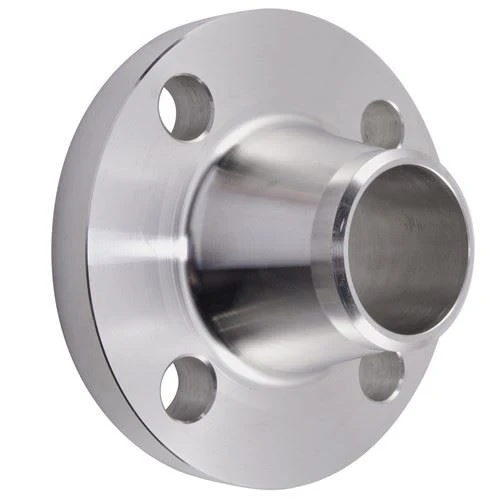
- Welding Neck Flange Asme B16 5 Class 150: This type of flange is designed with a long tapered hub that provides excellent stress distribution. It is commonly used in high - pressure and high - temperature applications. You can learn more about it Welding Neck Flange Asme B16 5 Class 150.
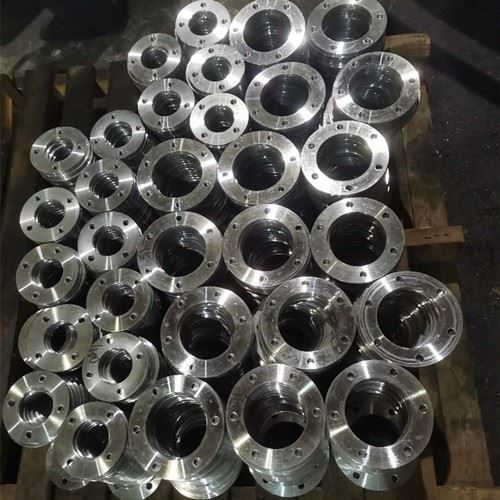
- DIN2576 Plate Forged Flange: These flanges are forged from plate materials and are known for their simplicity and cost - effectiveness. They are widely used in general industrial applications. More details can be found at DIN2576 Plate Forged Flange.
- Astm A105 Forged Steel Flanges: Made from carbon steel, these flanges are suitable for a wide range of applications. They offer good strength and ductility. To get more information, visit Astm A105 Forged Steel Flanges.
Corrosion Resistance of Steel Flanges
Steel is an alloy mainly composed of iron and carbon, and in some cases, other elements are added to enhance its properties. However, plain carbon steel is generally not very resistant to corrosion in highly corrosive chemical environments. When exposed to acids, alkalis, or salts, the iron in the steel reacts with these substances, leading to the formation of rust or other corrosion products.
For example, in a sulfuric acid environment, the iron in the steel will react with the acid to form iron sulfate and hydrogen gas. The reaction can be represented by the following chemical equation:
[Fe + H_{2}SO_{4}\rightarrow FeSO_{4}+H_{2}\uparrow]
This reaction not only weakens the structural integrity of the flange but also can contaminate the fluid being transported in the pipeline.
Improving Corrosion Resistance
Although plain carbon steel flanges have limited corrosion resistance, there are several ways to improve their performance in corrosive chemical environments:
Material Selection
- Stainless Steel Flanges: Stainless steel contains chromium, which forms a passive oxide layer on the surface of the steel. This layer acts as a barrier, preventing further corrosion. For example, 304 and 316 stainless steel are commonly used in corrosive environments. 316 stainless steel, in particular, contains molybdenum, which enhances its resistance to pitting corrosion in chloride - containing environments.
- Alloy Steel Flanges: Some alloy steels are specifically designed for corrosion - resistant applications. They may contain elements such as nickel, copper, and titanium, which improve their corrosion resistance and mechanical properties.
Surface Treatment
- Coating: Applying a protective coating to the surface of the flange can significantly improve its corrosion resistance. Common coatings include epoxy coatings, zinc coatings, and ceramic coatings. Epoxy coatings provide a chemical - resistant barrier, while zinc coatings offer sacrificial protection, where the zinc corrodes preferentially to the steel.
- Galvanizing: Galvanizing is a process of coating steel with a layer of zinc. This can be done through hot - dip galvanizing or electro - galvanizing. Hot - dip galvanizing provides a thick and durable zinc coating that can protect the steel from corrosion for an extended period.
Case Studies
Let's take a look at some real - world examples to illustrate the use of steel flanges in corrosive chemical environments.
In a chemical plant that produces fertilizers, sulfuric acid is used in the production process. The pipelines that transport sulfuric acid are equipped with 316 stainless steel flanges. These flanges have been in service for several years without significant corrosion. The passive oxide layer on the surface of the stainless steel has effectively protected the flanges from the corrosive action of the sulfuric acid.
On the other hand, in a water treatment plant that uses sodium hypochlorite as a disinfectant, some carbon steel flanges were initially installed. Over time, the flanges showed signs of severe corrosion due to the presence of chlorine in the sodium hypochlorite solution. After replacing the carbon steel flanges with coated stainless steel flanges, the corrosion problem was effectively solved.
Considerations for Using Steel Flanges in Corrosive Environments
When considering using steel flanges in corrosive chemical environments, the following factors should be taken into account:
- Type and Concentration of the Corrosive Substance: Different corrosive substances have different levels of aggressiveness. For example, concentrated hydrochloric acid is more corrosive than dilute hydrochloric acid. The type of corrosive substance will also determine the most suitable material or surface treatment for the flange.
- Temperature and Pressure: Higher temperatures and pressures can accelerate the corrosion process. In high - temperature and high - pressure environments, the material and design of the flange need to be carefully selected to ensure its long - term performance.
- Fluid Velocity: High fluid velocity can cause erosion - corrosion, where the corrosive fluid wears away the protective layer on the flange surface, leading to increased corrosion.
Conclusion
In conclusion, while plain carbon steel flanges have limited use in highly corrosive chemical environments, with proper material selection and surface treatment, steel flanges can be effectively used in such conditions. As a steel flange supplier, we offer a wide range of flanges made from different materials, including stainless steel and alloy steel, and we also provide various surface treatment options to meet the specific requirements of our customers.
If you are looking for high - quality steel flanges for your corrosive chemical environment applications, please feel free to contact us for more information and to discuss your procurement needs. We are committed to providing you with the best solutions and the highest level of service.
References
- Fontana, M. G. (1986). Corrosion Engineering. McGraw - Hill.
- Uhlig, H. H., & Revie, R. W. (1985). Corrosion and Corrosion Control. Wiley - Interscience.
- ASME B16.5 - 2017, Pipe Flanges and Flanged Fittings.