

Are 90 Degree Lr Elbows affected by vibration?
Jul 03, 2025
As a supplier of 90 Degree LR Elbows, I often encounter various technical inquiries from customers. One question that comes up frequently is whether 90 Degree LR Elbows are affected by vibration. In this blog post, I'll delve into this topic, exploring the impact of vibration on these essential pipe fittings, the underlying scientific principles, and practical implications for users.
Understanding 90 Degree LR Elbows
Before we discuss the effects of vibration, let's first understand what 90 Degree LR Elbows are. These are pipe fittings that change the direction of a pipeline by 90 degrees. The "LR" stands for "Long Radius," which means the radius of curvature of the elbow is 1.5 times the nominal pipe size. This design provides a smoother flow path compared to short radius elbows, reducing pressure drop and minimizing turbulence in the fluid or gas flowing through the pipeline.
90 Degree LR Elbows are widely used in various industries, including oil and gas, chemical processing, power generation, and water treatment. They are made from different materials such as carbon steel, stainless steel, and alloy steel, depending on the specific application requirements. For more information on pipe fitting standards and different types of elbows, you can visit Pipe Fitting Standard Elbow.
The Impact of Vibration on 90 Degree LR Elbows
Vibration is a common phenomenon in industrial pipelines, caused by various factors such as fluid flow, machinery operation, and external forces. When a 90 Degree LR Elbow is subjected to vibration, several issues can arise:
Fatigue Failure
One of the most significant concerns is fatigue failure. Vibration causes cyclic stress on the elbow, which can lead to the initiation and propagation of cracks over time. Fatigue failure typically occurs at the weld joints or areas of high stress concentration within the elbow. The repeated loading and unloading cycles weaken the material, eventually resulting in a catastrophic failure.
Loosening of Joints
Vibration can also cause the joints of the 90 Degree LR Elbow to loosen. In a pipeline system, elbows are usually connected to other pipes or fittings using flanges, threaded connections, or welding. The continuous shaking can gradually loosen these connections, leading to leaks or even disconnections. This not only poses a safety risk but also results in product loss and environmental pollution.
Erosion and Wear
The combination of vibration and fluid flow can accelerate erosion and wear of the 90 Degree LR Elbow. The vibrating motion can cause the fluid to impinge on the inner surface of the elbow at different angles, increasing the abrasion rate. Over time, this can thin the wall thickness of the elbow, reducing its structural integrity and increasing the likelihood of failure.
Scientific Principles Behind Vibration Effects
To understand why 90 Degree LR Elbows are affected by vibration, we need to look at the underlying scientific principles. Vibration is essentially a mechanical oscillation, which can be described by parameters such as frequency, amplitude, and phase. When a pipeline vibrates, the 90 Degree LR Elbow experiences dynamic forces that are proportional to the mass of the elbow, the acceleration due to vibration, and the stiffness of the surrounding structure.
The natural frequency of the 90 Degree LR Elbow is an important factor in determining its response to vibration. If the frequency of the external vibration matches the natural frequency of the elbow, resonance can occur. Resonance causes the amplitude of the vibration to increase significantly, leading to a much higher stress level and an increased risk of failure.
Mitigating the Effects of Vibration
To minimize the impact of vibration on 90 Degree LR Elbows, several measures can be taken:
Proper Installation
Ensuring proper installation is crucial. This includes using the correct type of joints, tightening the connections to the appropriate torque, and providing adequate support for the elbow. Proper alignment of the pipeline is also essential to reduce stress concentration and minimize the effects of vibration.
Vibration Isolation
Using vibration isolation techniques can help reduce the transmission of vibration to the 90 Degree LR Elbow. This can be achieved by installing flexible connectors, such as expansion joints or rubber hoses, between the elbow and the rest of the pipeline. These connectors absorb the vibration energy and prevent it from being transferred to the elbow.
Structural Reinforcement
In some cases, structural reinforcement may be necessary to increase the strength and stiffness of the 90 Degree LR Elbow. This can involve adding additional supports or using thicker walled elbows. Reinforcement can help reduce the stress level and improve the resistance to fatigue failure.
Real - World Applications and Case Studies
Let's take a look at some real - world applications where the effects of vibration on 90 Degree LR Elbows are significant. In a power generation plant, steam pipelines often experience high - frequency vibration due to the operation of turbines and pumps. If the 90 Degree LR Elbows in these pipelines are not properly designed or installed, they can be prone to fatigue failure and leaks.
In the oil and gas industry, offshore platforms are exposed to harsh environmental conditions, including wave - induced vibration. The 90 Degree LR Elbows used in the subsea pipelines need to be able to withstand these vibrations to ensure the safe and reliable operation of the production system.
Comparison with Other Elbow Types
When considering the effects of vibration, it's also interesting to compare 90 Degree LR Elbows with other types of elbows, such as 45 Degree Elbow. 45 Degree Elbows change the direction of the pipeline by 45 degrees, which generally results in a lower stress concentration compared to 90 Degree Elbows. However, they may still be affected by vibration, especially if the pipeline system has a high - vibration environment.
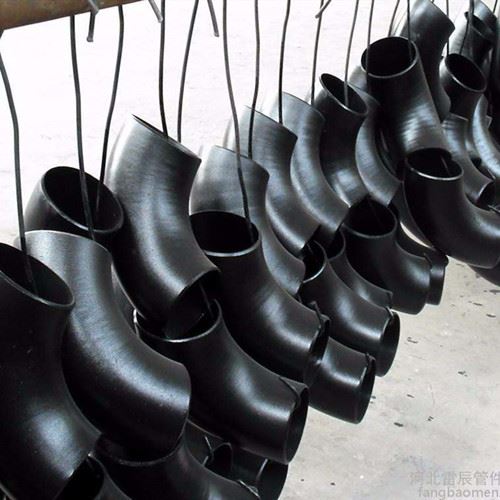

Another popular type is the Carbon Steel LR Elbow SCH40 DN50. The carbon steel material provides good strength and durability, but it is still susceptible to the effects of vibration. The SCH40 schedule indicates the wall thickness of the elbow, which can influence its resistance to vibration - induced damage.
Conclusion
In conclusion, 90 Degree LR Elbows are indeed affected by vibration. The cyclic stress, loosening of joints, and erosion caused by vibration can lead to serious problems such as fatigue failure, leaks, and reduced service life. However, by understanding the scientific principles behind these effects and implementing appropriate mitigation measures, the risks can be significantly reduced.
As a supplier of 90 Degree LR Elbows, we are committed to providing high - quality products that meet the specific requirements of our customers. If you are in need of 90 Degree LR Elbows or have any questions regarding their performance under vibration, please feel free to contact us for further discussion and potential procurement. We look forward to working with you to ensure the safe and efficient operation of your pipeline systems.
References
- Blevins, R. D. (1977). Flow - induced vibration. Van Nostrand Reinhold.
- Dowling, N. E. (2012). Mechanical behavior of materials: engineering methods for deformation, fracture, and fatigue. Pearson.
- Meguid, S. A. (Ed.). (2005). Handbook of fatigue crack propagation. Elsevier.